The Legal Implications of Concussions in Schools: What Superintendents Need to Know
Blogs
Disclaimer: PublicSchoolWORKS (“PSW”) is not a law firm and the information provided in this post is not legal advice. All information, content, and materials available are for general informational purposes only. Viewers should contact their attorney for advice on legal matters.
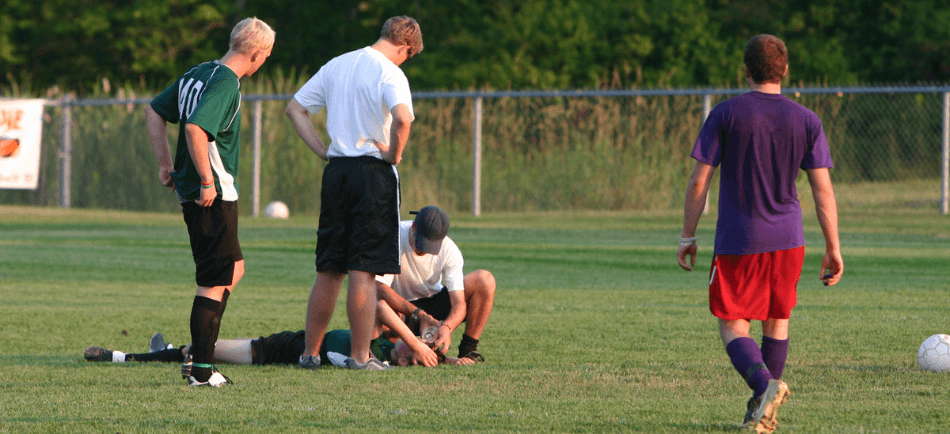
Concussions are a common injury in schools, particularly among student-athletes who participate in contact sports. The Brain Injury Research Institute shares that “an estimated 1.6-3.8 million sports- and recreation-related concussions occur in the United States each year.” While schools have a duty to protect their students, they must also be aware of the potential legal implications of concussions. In this blog post, we’ll discuss the legal landscape surrounding concussions in schools and what superintendents need to know to protect their students and their districts

Liability for Concussions in Schools
School districts and superintendents have a legal obligation to provide a safe environment for their students, which extends to extracurricular activities. If a student-athlete suffers a concussion while participating in a school-sanctioned sport, the school district could be held liable for any resulting damages. This liability could include medical expenses, lost wages, and pain and suffering. Below are several legalities of concussions Superintendents should consider:
1. Duty of Care
School districts owe a duty of care to their students while on school grounds or participating in school-sanctioned activities. The court in Rodriguez v. Inglewood Unified School Dist. found that “a special relationship exists between a local educational agency (LEA) and its students which imposes an affirmative duty on LEAs to take all reasonable steps to protect its students.” Failing to have a concussion policy or failing to follow a set policy — especially, when it’s against the law — is not only negligent but could be seen as a higher level of disregard for student safety.
2. State Laws
The National Library of Medicine shares that, “concussion law in all 50 of the United States and the District of Columbia generally involves the following 3 principles:
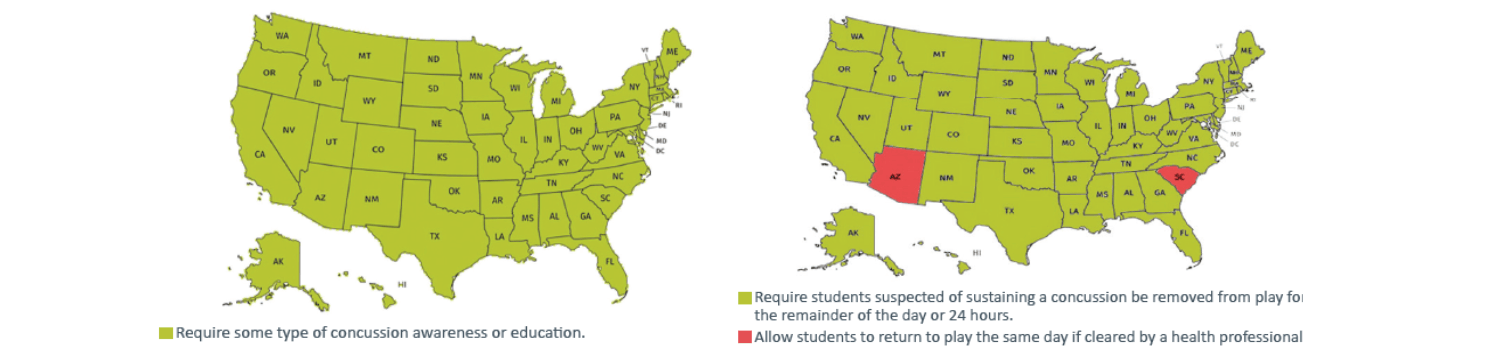
(1) concussion education for coaches, athletes, and parents/guardians
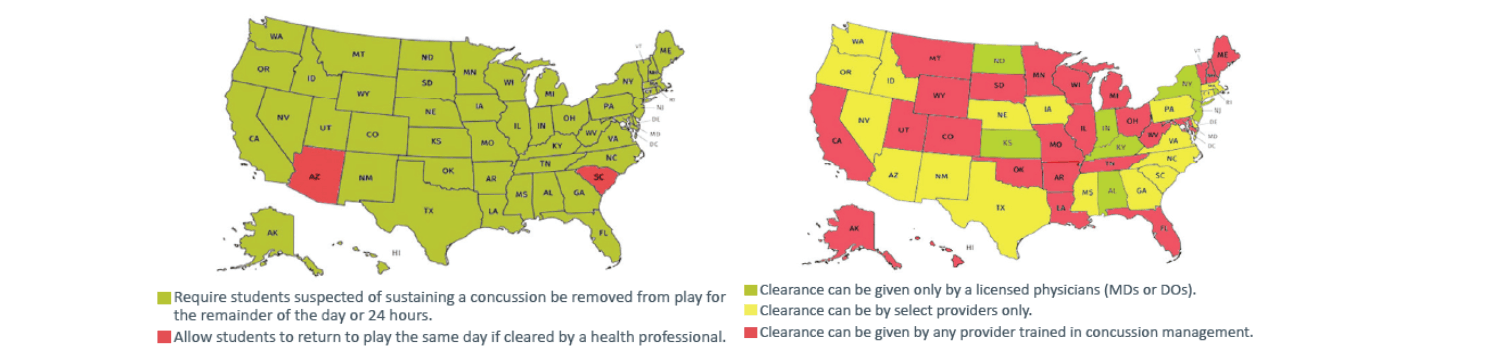
(2) removal from play at the time of suspected injury without eligibility for same-day return to play
(3) clearance by a healthcare provider trained in concussion management for an athlete to be eligible for return to play.”
3. Individuals with Disabilities Education Act (IDEA) or Section 504 of the Rehabilitation Act
Students who have sustained a concussion may be entitled to accommodations under disability laws such as the IDEA or Section 504 of the Rehabilitation Act. This could include adjustments to their schedule or modifications to their workload.
It is important to work with the student’s medical team and family to determine what accommodations are necessary and to ensure that they are provided in a timely and effective manner.
Concussion Policies in Schools
Schools should have a clear concussion policy that outlines the steps to be taken in the event of a suspected concussion. By having a well-documented policy in place, schools can demonstrate that they have taken steps to protect their students.
Some Components of a Concussion Policy to Consider:
Be sure to seek legal counsel to ensure your concussion policy meets the requirements of your state or board.
- How to identify concussion symptoms
- Protocols for removing a student-athlete from play
- Guidelines for returning the student-athlete to play
- Emergency Action Plan (EAP)
- Education & Training for student-athletes, coaches, athletic trainers, and athletic directors
Student-athlete concussion lawsuits
In recent years, there has been an increase in lawsuits filed by student-athletes who suffered concussions while playing sports. These lawsuits typically allege that the school district was negligent in its duty to protect the student-athlete from head injuries. While not all these lawsuits are successful, they underscore the importance of schools taking proactive steps to prevent and manage concussions.
1. $38 Million (Dismissed)
In Martin vs. HERMISTON SCHOOL DISTRICT, Martin’s parents claim negligence after their 15-year-old son and football player, Connor Martin, suffered a concussion and was then cleared by the district’s athletic trainer to play in subsequent games where he suffered another concussion.
2. $7.1 Million (Settled)
In Rashaun Council vs Grossmont Union High School District, 14-year-old, Rashaun Council, suffered a head injury during a football game but was never checked for a concussion and finished the game. Even after vomiting in the locker room following the game, his coaches did not follow concussion protocol. It was later found that none of his coaches had completed the state-mandated concussion training.
3. $4.4 Million (Settled)
In Eveland vs. San Marcos Unified School District, Scott Eveland was a high school senior on the football team when he suffered his concussion. The athletic director and coaches ignored his concussion symptoms and continued to play him until he collapsed on the sidelines.
State Concussion Laws for Schools
In 2009, a landmark law was passed in the state of Washington, called Zackery Lystedt Law, aimed at protecting student-athletes from concussion complications. The NFL shares, “thirteen-year-old Zackery Lystedt suffered a serious brain injury during a football game in 2006 when he was allowed to return to play following a concussion.”
After years of campaigning, Mississippi was the last state to enact a “return to play” law in 2014. Like the laws implemented in the other 49 states, the Mississippi Youth Concussion Act is modeled after the Lystedt Law.
The maps below outline some of the differences in concussion laws across the states:
Concussions are a serious issue in schools and can have significant legal implications for school districts. By having a comprehensive concussion policy in place, properly training coaches and staff, and staying up to date with the latest medical research and legal requirements, superintendents can help protect their districts from legal action and ensure the safety and well-being of their student-athletes.
Download Your Free Copy
Automate Your Concussion Training
Click below to learn more about automating and tracking your coach and staff concussion training to ensure your district is compliant.
Learn More