School Bus Driver Safety Training: Equipping Drivers and Staff for Success
Newsletter Article

Ensuring the safety of students during their daily commute to and from school is a top priority for school administrators. School buses are a crucial mode of transportation for an estimated 20.5 million students across the country, and it’s essential to have well-trained bus drivers and staff who can navigate the roads safely while caring for the well-being of their young passengers. In this comprehensive guide, we’ll delve into the importance of bus safety training, its key components, and the strategies that school administrators can implement to ensure the success of their bus safety programs.
Key School Bus Safety Facts
- In 2021, school bus-related crashes killed 108 people in the US
- Between 2012-2021, deaths in school bus-related crashes were to occupants in the other vehicle (70%), pedestrians (16%), school-bus passengers (5%), school-bus drivers (5%), pedalcyclists (3%) (National Safety Council)
- Impacts to the front of school transportation vehicles occurred in 45% of fatal school-transportation related crashes.
The Significance of School Bus Driver Safety Training
The significance of bus safety training cannot be overstated, as it plays a crucial role in protecting the lives of students entrusted to bus drivers and staff. These professionals are responsible for the safety and well-being of students during their daily journeys to and from school. Bus safety training equips them with the essential knowledge and skills necessary to respond effectively to emergencies and prevent accidents.
Moreover, bus safety training ensures that school districts remain in compliance with a myriad of board and state regulations governing school bus safety. Compliance with these regulations is not only a legal obligation but also directly affects the safety of young passengers who rely on the school bus system.
In addition to legal mandates, bus safety training can also reduce a school district’s liability in the unfortunate event of an accident or injury. By prioritizing safety training, administrators take proactive steps to mitigate potential legal and financial risks associated with accidents. This not only safeguards the well-being of students but can also protect the interests of the school district and its stakeholders.
Online Training for Bus Drivers
We have several courses designed just for school bus drivers and staff and the challenges they face:
- Bullying Awareness
- Defensive Driving
- Driving in Adverse Conditions
- Loading and Unloading Students
- Public Relations
- School Bus Inspection
- School-Bus Emergency Evacuations
- Student Behavior Management
- Transporting Students with Specialized Needs
School Bus Safety Hazards
In the realm of school bus safety training, it’s essential to address the most prevalent hazards that drivers and staff may encounter on the road. Understanding these hazards allows for better preparation and proactive measures to mitigate risks. Here are some of the top school bus safety hazards:
- Weather Conditions
- Traffic Congestion
- Distracted Drivers
- Impatient Drivers
- Student Behavior
- Mechanical Failures
- Loading and Unloading Zones
- Non-Compliant Drivers
- Road Conditions
- Emergency Evacuation
- Bus emissions
By addressing these top school bus safety hazards in training programs, school districts can better prepare their transportation teams to handle a wide range of challenges on the road while maintaining the highest standards of safety for their students.
Most Common Causes of Fatal School Bus Accidents
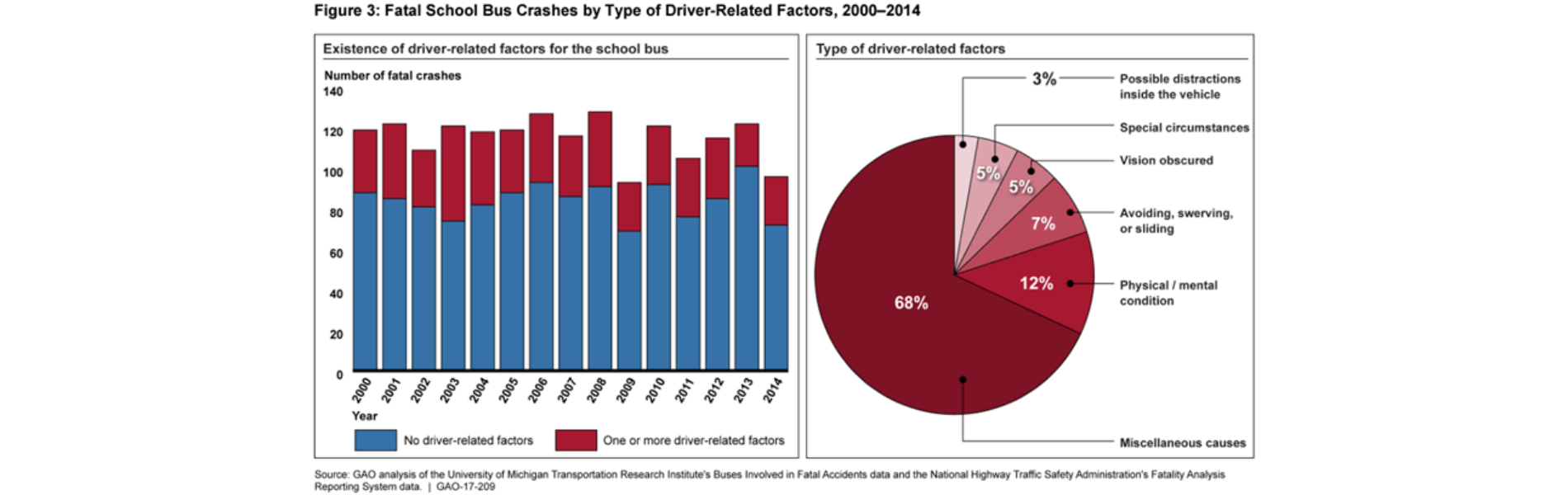
Safety training for school bus drivers and staff is designed to address the most common causes of accidents. Understanding these causes is crucial for developing effective training programs. According to a US Government Accountability Office report on fatal school bus crashes from 2000 to 2014:
Driver-Related Factors: Driver-related factors were involved in 27 percent of fatal school bus crashes during this period. The most common type of driver-related factor was “miscellaneous,” accounting for 68 percent of all driver-related factors. Miscellaneous factors include behaviors like leaving the vehicle unattended with the engine running or failing to stay in the proper lane.
Physical or Mental Condition: Physical or mental condition-related factors were identified in 12 percent of driver-related factors. This category includes behaviors such as careless driving, reactions to or failure to take drugs or medications.
Driver Violations: In 8 percent of fatal crashes from both 2000 to 2010 and 2011 to 2014, school bus drivers were charged with a violation. The most common types of violations fell under the “rules of the road” category, accounting for 36 percent of all violations. Examples of these violations include failures to signal for a turn or stop. The reckless, careless, and hit-and-run category represented 32 percent of all violations and includes behaviors like inattentive, careless, and improper driving.
These statistics highlight the need for training and ongoing professional development for school bus drivers. It is imperative that drivers are well-versed in traffic rules, safe driving practices, and the importance of maintaining their physical and mental fitness while on the job.
Key Components of School Bus Driver Safety Training
Driver Training: Bus drivers are the front-line staff responsible for student safety. They should undergo comprehensive training in defensive driving, emergency procedures, and student management. Regular refresher courses are essential to keep their skills sharp.
Emergency Response Protocols: Drivers and staff must be well-versed in emergency response protocols. This includes fire evacuation drills, first aid, and crisis management. Having a clear plan in place ensures swift and effective action during emergencies.
Student Management: Managing student behavior on the bus is crucial for safety. Training should cover techniques for maintaining discipline, addressing school bus bullying, and ensuring a safe and orderly bus environment.
Vehicle Maintenance: Proper maintenance of school buses is essential to prevent mechanical failures that can lead to accidents. Staff responsible for vehicle maintenance should receive specialized training.
Communication Skills: Drivers and staff should be skilled in effective communication with both students and parents. Open lines of communication can help address concerns and prevent potential issues.
Strategies for School Bus Safety Success
Invest in Ongoing Training: Bus safety training is not a one-time event. It should be an ongoing process with regular updates and refresher courses to keep staff informed about the latest safety practices and regulations.
Utilize Technology: Incorporate technology into training programs. Simulations, online courses, and interactive modules can provide hands-on experience in a safe and controlled environment. PublicSchoolWORKS’ online training software also provides flexibility for staff to take training when it’s convenient for them, reminds them to take training which increases compliance, and keeps a record of their training for school administrators to review whenever needed.
Don’t Forget Students with Disabilities and Special Needs: These students may require specific accommodation and support to ensure their safety during transportation. Bus drivers and staff must be well-trained in providing the necessary assistance, securing mobility devices, and addressing any medical needs that students with disabilities may have.
Engage Parents and Students: Safety is a collective effort. Involve parents and students in safety initiatives and educate them about their roles in ensuring a safe bus journey.
Regular Audits and Assessments: Conduct regular safety audits and assessments to identify areas that may need improvement. Encourage reporting of safety concerns and incidents for continuous improvement.
Celebrate Success: Recognize and celebrate the achievements of drivers and staff who demonstrate exceptional dedication to safety. Positive reinforcement can boost morale and motivation.
Bus safety training is a vital component of a school district’s commitment to the well-being of its students. It empowers bus drivers and staff with the skills and knowledge needed to ensure a safe and secure journey to and from school. By prioritizing ongoing training, embracing technology, and fostering a culture of safety, school administrators can equip their transportation teams for success, providing students and parents with peace of mind and confidence in the safety of their school buses.