Preventing Foodborne Illness Outbreaks in Schools
Newsletter Article


Foods contaminated with disease-causing bacteria or pathogens can cause a foodborne illness (commonly called food poisoning). According to the U.S. Food and Drug Administration, there are an estimated 48 million cases of foodborne illnesses every year — equivalent to 1 in 6 individuals. Each year, these illnesses result in an estimated 128,000 hospitalizations and 3,000 deaths.
An SNP employee with a gastrointestinal illness can pass their illness to others. This creates the potential for a foodborne illness outbreak. A foodborne illness outbreak is an incident in which two or more people experience the same symptoms after eating the same food. Foodborne illness outbreaks in schools disrupt normal school operations through absence and temporary closures.
Foodborne illness outbreaks in schools tend to be seasonal. Cases peak in the winter, making now the perfect time to review safe operating procedures and important measures SNPs can take to reduce foodborne risks in schools.
Below explores recommended procedures compiled from various sources. While the information provided is assumed to be correct, it does not take the place of state and federal regulations or the policies and procedures of your SNP.
Foodborne Illness Outbreaks in Schools
The Centers for Disease Control and Prevention (CDC) operates the National Outbreak Reporting System (NORS). NORS is a national surveillance system that gathers data on acute gastroenteritis outbreaks. According to NORS, from 2009 to 2019 there were 2623 school outbreaks (2020 totals dropped due to COVID-19 closures).
Norovirus and Shigella were the leading cause of outbreaks in K-12 schools. Norovirus alone accounted for two-thirds of outbreaks. The next most common causes of foodborne illnesses were salmonella and e-coli.
Most school outbreaks resulted from person-to-person transmissions. Foodborne transmission was the second leading cause of outbreaks. Both norovirus and Shigella can be spread via food and can persist on contaminated surfaces.
The main symptoms of foodborne illnesses are diarrhea and vomiting. Additional symptoms include:
- Dehydration
- Headache
- Nausea
- Fever/chills
- Abdominal pain/stomach cramps
- Fatigue
- Body aches
Depending on the type of foodborne illness, symptoms may appear within a few hours after exposure or up to 8 days later. The symptoms may last for a few days to over a week.
How to Reduce Foodborne Risks in Schools
Below are six strategies to help reduce foodborne risks in schools. The first three are key areas identified by the USDA. Much of the following information is from the Institute of Child Nutrition (ICN).
1. Prevention of Contamination
A recent USDA study found that only “32% of people clean and sanitize the surface used to prepare raw meat.” While this study isn’t specific to the school setting, it speaks to tendencies or the average population’s lack of food-safety knowledge, and reinforces the need for appropriate training, policies, and compliance to proper food handling practices. A great tip to help aid in the prevention of cross-contamination is implementing color-coded cutting boards to keep high-risk foods like raw meat, poultry, and seafoods away from fresh produce and ready-to-eat foods.
2. Time and Temperature
The USDA shares that “bacteria grow most rapidly in the range of temperatures between 40 ° and 140 °F, doubling in number in as little as 20 minutes. This range of temperatures is often called the “Danger Zone.” This makes strong time and temperature SOPs, training, and adherence extremely important to food safety for your schools. Be sure to check and record time and temperature in accordance with the monitoring procedures of your food service program.
3. Personal Hygiene
Good personal hygiene is a basic requirement of a food safety program. Good personal hygiene practices include:
- Clean uniform and aprons
- Wearing gloves to handle ready to eat foods
- Appropriate handwashing practices
Handwashing is the single most important practice in any SNP. It is important that school nutrition employees know how and when to wash their hands. Please note, the FDA recommends using hand sanitizer only after hands have been properly washed and dried. It is important that handwashing sinks are properly supplied during all hours of operation. Handwashing posters should be posted near handwashing sinks, in food preparation areas and in restrooms.
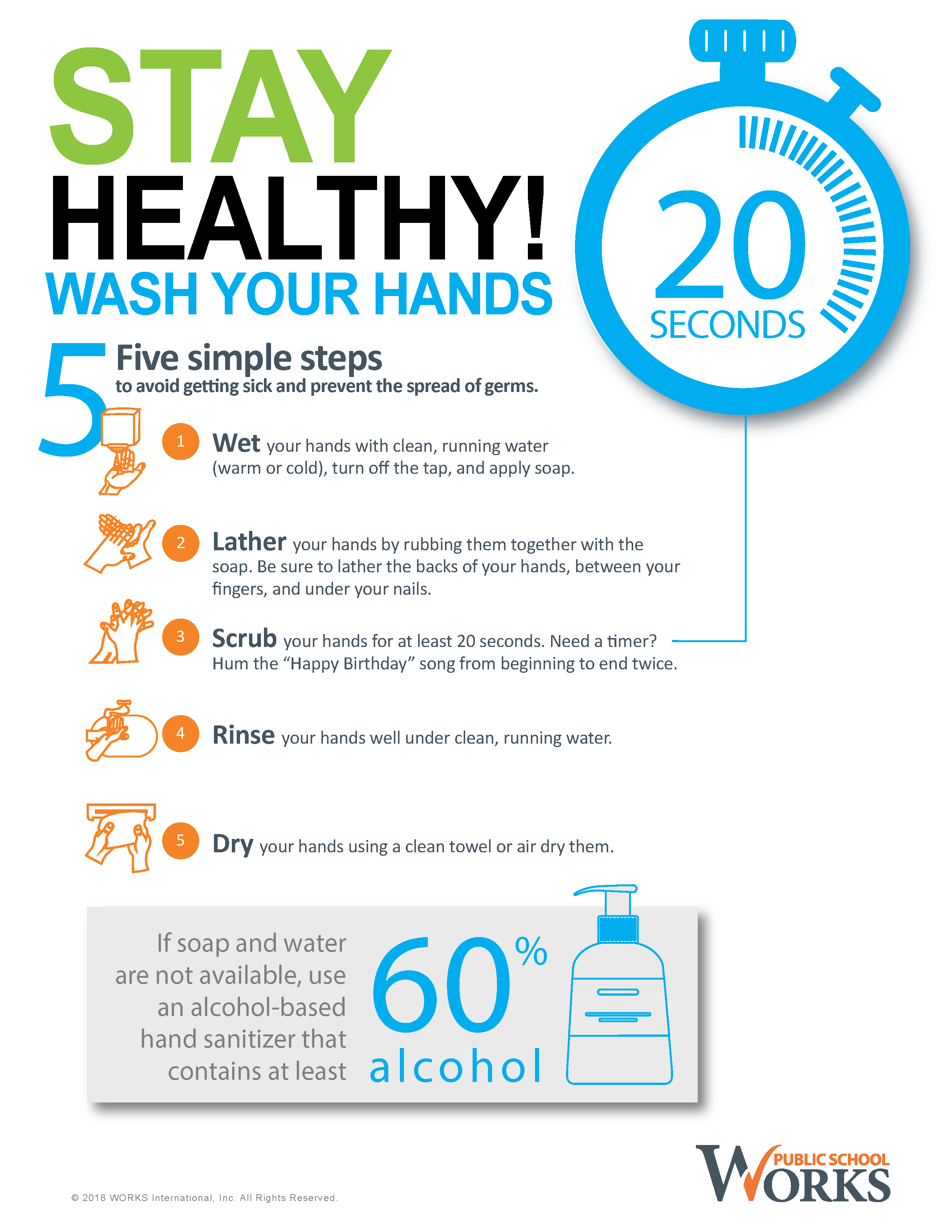
Download our Handwashing Poster
A great way to help staff comply with handwashing is to use visual reminders at every sink and near high-contamination areas, like where raw meat is prepped. Get your free PSW poster today to help encourage food safety!
4. Monitoring
An SNP supervisor should ensure all employees adhere to all policies and SOPs. Employees who are observed to not wash their hands per SOP should be asked to wash or re-wash their hands and reminded of or retrained on proper handwashing procedures.
5. Employee Illness
Because of how foodborne illnesses spread, it is extremely important that employees stay home when they are sick or are experiencing the symptoms of a foodborne illness.
- An employee who is experiencing diarrhea or vomiting should be excluded from work until they are symptom free for 24 hours.
- An employee who is diagnosed with a foodborne illness should be excluded from work and the local health department should be contacted.
6. Parent Communication
Food made on-site isn’t the only risk of foodborne illness in schools. It’s also important to consider students who pack lunch or bring other food from home. Sending home reminders on safe food-prep practices a few times a year is a great way to help prevent outbreaks. Some simple tips for parents include:
- Dry fruits and vegetables after washing them.
- Use insulated, soft-sided lunch totes to keep perishable foods cold.
- Pack two cold sources (such as a small frozen gel pack or frozen juice box) with perishable foods.
Responding to a Foodborne Illness Outbreak in Your School
While foodborne illness outbreaks in schools are uncommon, even a single case is one too many. Early detection is essential to controlling a foodborne illness outbreak in schools. Here are some strategies for responding to a foodborne illness outbreak:
1. Notify health authorities:
- Report any suspected outbreak to your local health department promptly.
- Collaborate with local health authorities to investigate and trace the origin.
- Cooperate with their investigation and follow their guidance.
2. Isolate and identify the source of transmission:
- Stop all foodservice operations including preparation, display and serving food if the suspected source of the outbreak is related to food.
- Isolate affected individuals to prevent further spread.
- Identify the specific food item or source that caused the outbreak.
3. Communicate the situation with parents, staff and students.
- Provide clear instructions on symptoms, precautions, and next steps.
- Provide clear instructions on preventive measures.
- Remind students, staff and parents about proper hygiene and food safety practices
4. Deep cleaning and sanitization:
- Thoroughly clean and sanitize all food preparation areas, utensils and surfaces.
- Dispose of any contaminated food items properly.
5. Review and evaluate existing food safety protocols and procedure:
- Reinforce proper food handling, storage and preparation practices among staff.
- Promote effective handwashing, safe food handling and other preventive measures.
6. Monitor and follow up:
- Monitor affected individuals for symptoms and seek medical attention if necessary.
- Follow up with affected individuals to track recovery and address any ongoing concerns.
Prevent future outbreaks by implementing preventive measures, such as regular inspections, staff training and adherence to food safety guidelines and SOPs.
What to Expect During an Outbreak Investigation
Each outbreak will have unique characteristics that present a variety of issues for investigators. An investigation will go through many steps. It may take investigators days, weeks, or months to identify the source of contamination.
The USDA recommends working with your state or local health department to determine what records, documents, and information the school nutrition team will need to provide during an outbreak investigation prior to an outbreak. Have procedures in place for employees to maintain complete records, documents, and information— and be able to retrieve them quickly.
How to Communicate After an Outbreak
After an outbreak at a school occurs, it’s important to follow proper communication guidelines. A sample HACCP-based SOP from the ICN on communicating during a foodborne illness outbreak begins with the SNP manager working with school administration and the Health Department to develop a crisis communication plan and foodborne illness outbreak response.
Student communication plans will cover:
- Foodborne illness symptoms
- How foodborne illness is spread
- Handwashing for prevention
- Staying home when sick
- Responding when a student or classmate becomes sick
Parent and media communication plans will cover:
- Foodborne illness symptoms
- How foodborne illness is spread
- Handwashing for prevention
- Caring for an ill family member
- When ill students should be kept out of school and when recovering students can return to school.
Protecting the safety and welfare of students and school staff is a top priority of SNPs. Proactive measures are essential in managing and preventing foodborne illness outbreaks in schools along with collaboration and clear communication with health authorities should an outbreak occur.
USDA Professional Standards: Mandates Made Easy
Get your copy of our USDA eBook today! This comprehensive guide, curated by our R&D team, covers training for nutrition staff, professional standards, food service tools and equipment safety, managing anaphylaxis in schools, and more!
Download Now!