Nathan Barrett
Champion Showcase Profile
What’s your number one concern or priority for this upcoming school year?
Safety is always our top priority. Fortunately, we have a strong administrative team and a cutting-edge security director, which has led to maintaining close partnerships with law enforcement agencies and emergency services, meeting monthly to ensure comprehensive preparedness. In addition to this, we have even established a Police Department within our school district, further enhancing our readiness.
Every year, we strive to enhance our security protocols, responding quickly to governmental changes or any unforeseen issues that arise. We undergo vulnerability assessments every three years, where we are informed of our potential weaknesses. This feedback is invaluable and drives our improvement efforts.
Following our most recent assessment, we have dedicated our efforts to addressing and eliminating these pain points. The focus this summer has been to proactively and swiftly tackle these areas of improvement.
What are some of the things that you’re addressing? Are you utilizing different technologies to achieve that goal?
We have implemented several physical modifications to our school buildings, including safety barriers and revised traffic patterns to minimize students’ exposure to vehicles. These projects are ongoing, and we have quite a few working in tandem right now.
Our district has set a benchmark within our intermediate unit in Pennsylvania, and a lot of other districts have been referred to us to see how we do these things. Key safety measures we have in place include high-speed metal detection every morning, a clear backpack policy, and a no-cell phone policy that has been in place for three years. This policy has garnered attention, leading to an invitation for me to speak at a forum in Lititz, PA, regarding Senate Bill 1207, which aims to ban cell phones in schools to curb plagiarism and cyberbullying.
Eliminating cell phones has also improved the integrity of our assessments, as it prevents students from sharing test answers. Fortunately, we’re already past the resistance from parents. The biggest resistance on banning cell phones was that they want to be able to know their kid is okay. To remedy that concern, we introduced a crime watch app that provides real-time updates to parents, addressing concerns about their children’s safety.
This proactive approach towards safety has put us ahead of the curve, earning us recognition and pride. We look forward to maintaining this momentum throughout the year.
What’s your long-term vision for your district over the next five years?
Prioritizing literacy development in early childhood is our mission, especially in the crucial K-2 range. There is a strong link between literacy skills and subsequent academic performance, and our aim is to ensure that every student is reading at grade level by third grade to prevent future hardship.
Our dedicated team is one of the few in Pennsylvania certified in the science of reading. We adopted this approach three years ago and it involved a fundamental shift in teaching methods, requiring us to relearn how to teach reading. Despite initial resistance, our staff has now successfully completed their training.
It was just announced recently that due to improved literacy scores in other states, Pennsylvania will require all teachers to be trained in the science of reading. Our staff, being already trained, is prepared for the future requirements.
As our teachers started adopting these new skills, their acceptance increased. Three years into our new approach, we have entirely phased out outdated teaching methods. We focus on building confidence in our students, recognizing and appreciating their progress rather than comparing them to peers.
We individualize our teaching approach by studying every student’s data and placing them in an appropriate learning environment. We monitor progress every 10 days and intervene if we notice any consistent downward trends. This method has proven successful over the last three years, and our staff members continue to be committed to this cause.
How are you approaching recruiting and retention?
Societal challenges are deterring people from entering or staying in the education profession. Those already in the field are our most valuable assets, and we’ve implemented programs such as “Care for the Carer” to support them. For instance, we took our staff to an equestrian therapy farm, providing a unique form of therapy with horses. This experience was profound and fostered a sense of being wanted and understood.
During the equestrian therapy, we read a children’s book, “No Flies On Me,” which challenged our staff to reflect on their daily struggles. This activity created a poignant moment of shared understanding that we all carry burdens, reminding us to be kind to each other.
As we build on “Care for the Carer”, we’ve collaborated with a Wellness agency to introduce mindfulness activities throughout the day to help release tension. We’ll have a dedicated wellness professional in each building providing staff access to yoga, meditation, and other activities to enhance their well-being.
In addition, we take pride in making our staff feel valued and safe. An example of this is treating our staff to themed lunches on in-service days. We are also in the process of consolidating our elementary buildings into one unit and plan to convert one of the buildings into a childcare center for our staff, providing a significant cost-saving perk.
Lastly, we hold administrative meetings every Thursday to discuss and resolve staff issues promptly, demonstrating our commitment to their well-being and satisfaction. I make sure that my administrative staff knows that concerns or issues need to be quickly and aggressively addressed to show that we care. I want my staff to be comfortable, so they don’t feel like they need to look for other jobs or opportunities. We also continuously appreciate our staff, posting their accomplishments and ‘feel-good’ stories on our social media channels. We believe such initiatives will give our staff reasons to stay and continue their invaluable work.
How are you addressing student athlete safety?
At our sporting events, we prioritize safety by implementing strict metal detection protocols and having a zero-tolerance policy for weapons. Our district law enforcement officers are always present and vigilant, ensuring a safe environment. We also have student conduct policies in place for students who are at extracurricular activities as an additional deterrent to unsafe behaviors.
When it comes to health and safety, we adhere to stringent concussion protocols and employ top-of-the-line sports equipment. We immediately address any equipment that needs reconditioning to meet national or state regulations. We just replaced our helmets, and always prioritize safety over competition when head injuries are concerned.
Is there anything else that you’re doing to cultivate an environment that supports student mental health?
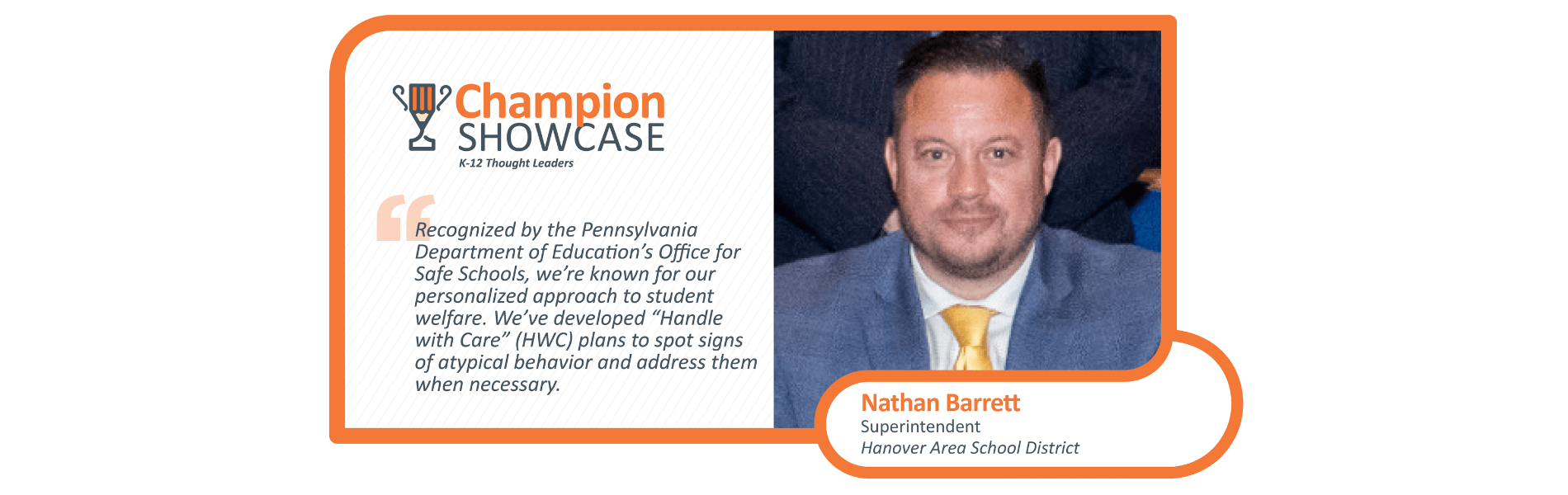
Recognized by the Pennsylvania Department of Education’s Office for Safe Schools, we’re known for our personalized approach to student welfare. We’ve developed “Handle with Care” (HWC) plans to spot signs of atypical behavior and address them when necessary. Every departure from the norm could signal a change in a student’s life and our trained staff are adept at identifying these shifts.
When we notice a deviation in a student’s typical behavior, we launch an investigation through the ACEs Screener (Adverse Childhood Experiences Screener) to determine if the student has had a qualifying circumstance. From there, we tailor an HWC for the student, ensuring that their experience at school is as comfortable as possible. For example, a student affected by verbal abuse which resulted in PTSD requires a specific approach – no raised voices or aggressive movements – and these cautions are highlighted on their profile, easily accessible to all relevant staff.
Our key goal is to prevent the initiation of the fight or flight response – a triggered student is unresponsive for up to 30 minutes. We focus on providing a safe, nurturing environment conducive to learning, enhanced by zero-tolerance policies on bullying and cellphone use.
When these measures aren’t enough, we have social workers, trauma therapists, and outpatient clinics on-site, partnering with local agencies to provide a ‘one-stop shop’ for student welfare. Having these services on-site help reduce absences and instruction disruption. Our comprehensive approach ensures the student feels safe in all aspects of school life.