Lisa Nobles
Champion Showcase Profile
What is your number 1 concern for this school year as an HR director of a sizeable school district?
The #1 concerns is the consistent teacher and bus driver shortage that is not just plaguing our district, but every district in the nation. Our entire goal is to be able to serve our students and without the dedicated professionals in those vital roles that support those student services, we cannot meet our baseline mission. We still have multiple vacancies with relationship to special education teaching, counseling, we are still seeking speech language pathologists, we have multiple bus driver openings, we have vacancies in our cafeterias, and paraprofessionals are always a constant need. What we’re seeing in general is that K-12 and the salaries we’re able to offer cannot keep pace with the economy and expectations, very specifically in the state of Illinois. No offense to Chicago, but they can pay a lot more than we can because of the metropolitan area so trying to draw that talent into a smaller community that is right next door to a larger district is tough. Because of the size and economic status of the students in their district, they are able to receive a good amount of funding. Fortunately, and I guess unfortunately, our area is more affluent so we don’t get the same level of funding which makes it much more difficult to appropriately compensate the top talent that we’re trying to draw into our district. So really for us, the #1 thing is making sure we have the dedicated staff in place to serve our students.
In our situation, culture is the common driver for retention, but you can’t retain someone who wants to retire or someone whose spouse has relocated. So there’s a reason why even those neighboring districts who have those higher pay rates and even some of those who have various benefits, there’s a reason we still have our longstanding staff. When we have a staff member leave for whatever reason, we’re drawing those outsiders in. That’s the hardest part. Right now with the economy the way it is, money is a big driver. And while I’m not necessarily looking for the money hungry person, I’m looking for the right person, and they’re still going to look and get paid for their talents and abilities.
We’re very fortunate that we have a large group of instructional coaches and reading interventionists, and we have doubled the number of paraprofessionals that work in this district over the last two years. We have significant support staff in place which is really beneficial and keeps our teachers on task. I think what we’re going to see, especially toward the end of this year, ESSR grant funding is ending at the end of 2024 and we were able to add a number of those positions with that funding, so we’re looking into some strategic opportunities to reallocate funds so that we can keep our staff in place and keep those supports in place, not just for our students, but also in support of our teachers.
What is your districts’ five year vision?
We’ve just been through the process of redeveloping our vision and strategic plan over the next several years. The focus at this point is restructuring culture, under the concept of collective responsibility and making sure that all our educators from a custodian all the way up to myself understand that everything we do is impacting those around us and has an influence on what happens with our students. I may not see any students, but without me doing my job, there wouldn’t be any people to teach the students. So all of us sort of drive towards that function. And then with that strategic plan driving into delivery of student services, we’ve drilled it down so far as to even what characteristics would we expect to have for our students and our teachers. What does a graduate look like when they come out of a Ball-Chatham school? What does the talent that builds them up look like? So what I expect to see over the next several years is a restructuring of our marketing plan, our recruiting processes, and also we’re seeing some adjustments into the programs we’re offering from the curriculum aspect getting into more of the career pathways to support students getting, not just into college, but into the career that they’re seeking. In alignment with that, building those partnerships with those institutions beyond high school so that we can create this process of flow for our students – give them somewhere to go, and then alternatively draw that talent right back in.
What is the role of technology in your district?
Technology plays a huge role no matter what position you’re in, in the district. From an HR perspective we have worked very, very hard since I arrived moving our entire hiring process into an electronic format. Whether it is the application or hiring paperwork, everything is electronic now. Just getting our staff in the door, we reduce our time to fill from six weeks to now three to four weeks. Three to four weeks may still seem like a long time but given the significant amount of screening required to get into a K-12 institution, that is a huge improvement. When you start looking at capabilities for teachers and staff in the buildings, one of the advancements that we did was utilize a software that helps us quickly create staff instructions so if there is a program and they have to learn a new process, I can make instructions in about 10 minutes and have that out the door. That’s a huge improvement.
Additionally, all our hiring, resignation, transfer paperwork – we have staff moving from building to building – all of that was paper-based. We have about half of our processes now electronically based through our primary HRIS, which is linked to our student system, so when a principal makes that job offer and they submit it, it’s with HR within seconds so we can start our process much more quickly than waiting for a document to come through interoffice mail.
Our HRIS is linked to PublicSchoolWORKS, and I’ve been working with your Evan from your tech team and our dedicated PublicSchoolWORKS safety advisor, Cris, to improve our file feed process. Everyone was getting uploaded, which wasn’t your fault, it was our problem, but I worked with your tech department to limit when staff start phasing into that upload and when classes are assigned to them. Luckily, tech had an immediate answer where we could add a start date and it resolved that issue quickly and easily. The other issue we had was when an employee had two roles, such as a teacher who was also a coach. Both of those roles have their own responsibilities and training requirements. We’ve worked with PublicSchoolWORKS where we send over a true mess of data, and they’ve taken it and cleaned it up and now it seamlessly assigns training the way we need it.
I’ve been with a lot of companies that were not service oriented, and once you get there and you’re not getting the service you expected, you’re gone. Service sells and service retains, and I cannot say enough about the team we work with at PublicSchoolWORKS. I’ve had two different cases with these data examples. We gave one unrelated company data that was much cleaner and more simple than what we gave to PublicSchoolWORKS and they weren’t willing to put in that back-end development to help us achieve what we needed.
What is your team doing to promote positive mental health?
What we’ve seen is an ongoing result of the covid-19 pandemic. What we saw through that period and very specifically here in Illinois, the restrictions that were put on staff, students, and the public at large had such a huge impact on the mental health of staff and students both. Prior to coming here, I lived in South Dakota and worked in a school district. In South Dakota, we shut down March to May and we returned to school using a variety of mitigating factors, such as masking and barriers, as well as a hybrid student and employee schedule, but ultimately, we were back face-to-face. Here in Illinois and Ball-Chatham School District, the restrictions were much more stringent, and maintained for a significantly longer amount of time where you didn’t have that face-to-face interaction. Our teachers were asked to maintain both face-to-face and electronic workloads with students while keeping engagement both places. Some staff were dedicated to the web-based and some staff were dedicated to in-person, but they weren’t seeing the same students every day. It wasn’t until maybe halfway through when they actually brought everyone back face-to-face in the district.
When we moved into the district from South Dakota, my own children started school here in January of 2021. When you move, your whole life is transitioning and changing and my kids experienced almost like a trauma, so they were struggling and learning all these different rules in the classroom. When I spoke with one of their teachers about it, she addressed the class and asked who had done remote learning for a year and who remembered how difficult it was to come back into the classroom. They were sharing how they had forgotten what to do in the classroom, how to get around the school, who certain people were, and how difficult it was for them to adjust being back. And when this teacher was able to compare moving to a new school to coming back from remote learning, students had such levels of empathy, that they were crying because they remembered how difficult that was. What we tend to forget as adults, is that we have all of our skills to cope with that level of adjusting, and even as adults we are not all doing that great after covid. Then you have students who were just building friendships and starting to really learn about who they are, and then they all get sent home. Then they get brought back with learning loss, stress from parents and being stuck in a home, stress from society, changes coming back with a new routine again, and it’s a huge impact on student mental health.
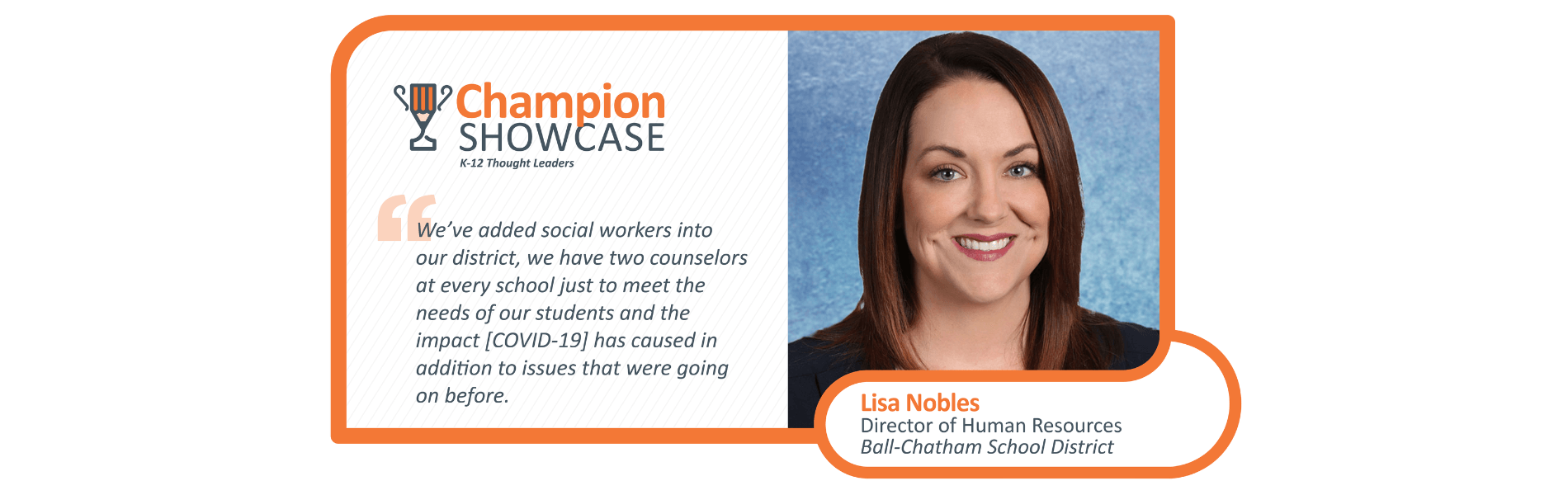
Because of it, we’ve added social workers into our district, we have two counselors at every school just to meet the needs of our students and the impact this has caused in addition to issues that were going on before. It’s not like this is the only trauma happening. From a staff perspective, we’ve bolstered our wellness program within the district. We had a district health fair with both medical and mental health professionals. We’ve brought in vendors to provide services to our staff and will be doing that again this year as well. We switched our insurance provider that offers more support to our staff. We have an employee assistance program that offers free counseling to our staff. We’ve been providing additional training to our administrators to recognize and respond to someone who may be experiencing something so we can act more quickly. It’s a huge undertaking and no one has really recovered or knows if we truly ever will. It’s going to be a while. We have an entire generation of students that are growing up with this as their first experience and an entire group of employees who have had to switch and then switch back, and yet still so much of that pressure is still on them.
Nominate a district leader we should showcase!
Is there a leader in your district or a neighboring district who is an innovator pushing their district forward? We want to showcase them! Drop their information below and we’ll do the rest.