How to Address Distracted Driving Among School Bus Drivers
Newsletter Article

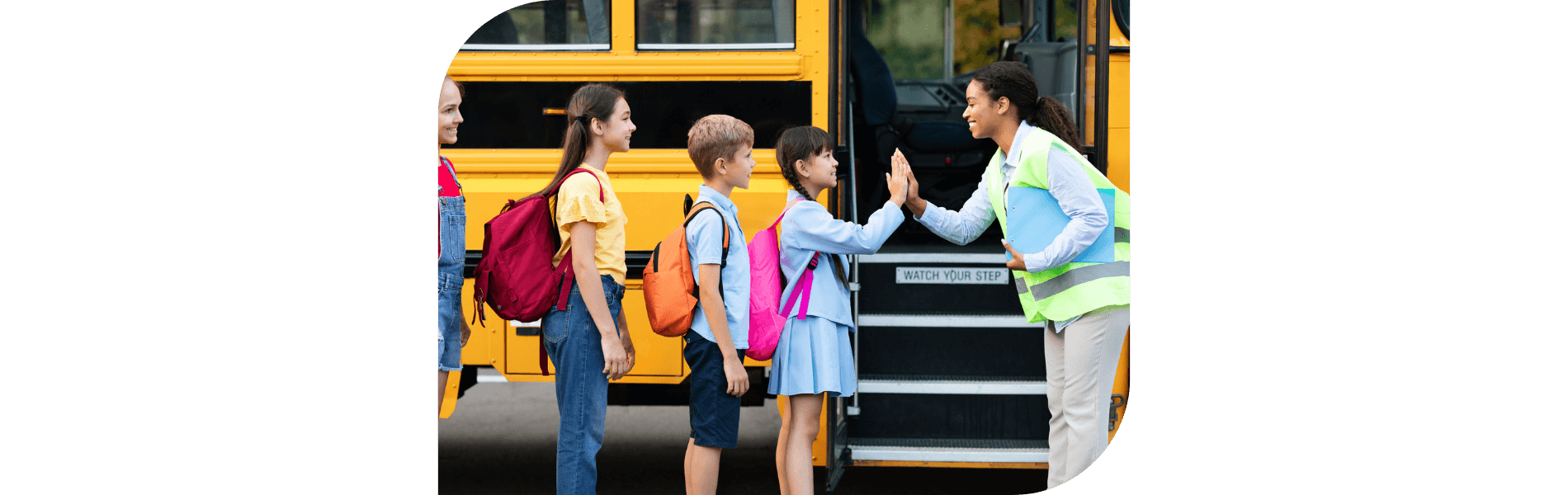
Distracted driving is a big concern in today’s world, and it can be especially dangerous when it involves school bus drivers. According to the National Highway Traffic Safety Administration (NHTSA), approximately 108 people are killed and 13,200 people are injured in school bus accidents each year. School bus drivers are entrusted with the safety of the children in their care and their safety should be top priority for school administrators and transportation directors. This blog will explore what distracts school bus drivers and offer practical strategies for prevention.
Understanding Distracted Driving for School Bus Drivers
Distracted driving is a serious issue that contributes to thousands of vehicle crashes each year, and school bus drivers are no exception as stated by the NHTSA. According to the NHTSA, distracted driving is one of the leading causes of road accidents.
While many people associate texting with distracted driving, it is so much more than that, especially for school bus drivers, who face unique challenges. There are three main types of distracted driving: visual, manual and cognitive.
- Visual distractions occur when the driver takes their eyes off the road, even for a second. This includes looking at billboards, street signs, a GPS, a cellphone or even passengers.
- Manual distractions involve taking hands off the wheel, such as eating or drinking, adjusting the radio or mirrors, using a GPS or checking a phone.
- Cognitive distractions take the driver’s attention away from driving. This includes talking to passengers, being under stress, feeling fatigued or daydreaming.
If a school bus driver is experiencing even just one of these distractions it could be disastrous, especially when responsible for the safety of children on a school bus.
What distracts school bus drivers?
As of the 2022-23 school year, school buses in the U.S. transport about 20.5 million public school students each day according to school bus fleet. Answering the question, “How many school bus accidents were caused by distracted driving?” is difficult. Data on school bus accidents caused by distracted driving is limited. However, such accidents, while rare, do occur.
Understanding what distracts school bus drivers is essential to creating effective strategies for preventing accidents and ensuring student safety. Bus drivers are responsible for the safety of many students during transportation, whether it’s to and from school, on a field trip or to a sporting event. While a few examples of distractions were mentioned previously, let’s take a closer look at the specific factors that can take a bus driver’s attention away from the road.
Student behavior
A standard school bus can accommodate three students per seat with a maximum seating capacity of 72 passengers. Bus rides can last anywhere from 10 to 40 minutes or even longer. It is unrealistic to expect all students to sit quietly for the entire duration of the ride. During this time, drivers often have to deal with students talking loudly, getting out of their seats or even fighting, all of which pull attention away from the road.
Technology
School buses typically come equipped with GPS systems or communication devices. While these are necessary, they can also cause a distraction to drivers. If a driver is busy typing an address into a GPS, or if the display is too small to read easily, it can be a major distraction.
Fatigue and multitasking
The average start time of school varies, starting anywhere between 7:30 am to 9:00 am. Bus drivers have to begin their routes even sooner to ensure all of their assigned students are picked up before the school day starts. These early mornings, combined with the multitasking surrounding driving, can make it harder for drivers to stay focused.
How to Prevent School Bus Driver Distractions
By identifying the common distractions school bus drivers face, school administrators and transportation directors can implement strategies to reduce them, helping to improve the overall safety of school bus travel. Here are some ways to prevent distracted driving among school bus drivers.
Training
- Regular training sessions can help drivers learn to address common distractions.
- Role-playing scenarios allow drivers to experience distractions and learn how best to overcome them.
Student behavior management system
Implement a seating chart and post clear rules to help manage student behavior.
- A basic code of conduct should be provided to set boundaries for students.
- Progressive discipline for misconduct can help students understand the importance of behaving appropriately during bus rides.
- For example, a student who misbehaves could receive a warning for the first offense, a call home for the second and a temporary ban from the bus for the third.
School Bus Monitors
- Having at least one other adult on the bus can help manage student behavior and reduce the burden on the driver.
- If districts cannot afford an additional employee, parent volunteers can be used.
Technology and technology controls
- Installing surveillance systems on the bus encourages appropriate behavior for both students and the driver.
- Side and rear-vision cameras can help prevent blind spots.
- Implement policies that ban cellphone use except in emergencies when the bus is parked.
- Equipping buses with larger tablets for navigation makes it easier for drivers to glance at directions.
- Drivers should adjust mirrors, set destinations, check traffic and ensure proper seating before starting the bus.
The role of school administrators and transportation directors:
- Reward programs: Recognize and offer bonuses for drivers that maintain clean safety records.
- Surprise audits or ride-alongs: These help to monitor driver behavior and enforce safety measures.
- Open dialogue: Encourage bus drivers to report any issues or difficulties, including fatigue or student behavior. Drivers should be healthy and well-rested before beginning their routes.
- Provide necessary tools: Equip drivers with the tools and training they need to stay focused.
- Parental involvement: Encourage parents to educate their children on how to behave responsibly while riding the bus.
- Student behavior management: Implement a school-wide student behavior management system that includes clear guidelines for behavior on the bus.
Tackling Distractions for Safer School Bus Rides
Distracted driving among school bus drivers is an important safety issues that requires attention from school administrators and transportation directors. In this blog, we discussed the unique challenges drivers face, from student behavior to technology and driver wellness. By understanding these challenges, effective strategies can be implemented to minimize distractions and ensure the safety of students. Training, behavior management systems and the use of additional adults on buses are just a few steps that can be taken to reduce risks. By using these tools and strategies, schools can ensure the safety and well-being of their students while riding on a school bus.
Ensure Safety with School Bus Driver Safety Training
Equip your bus drivers with essential safety training from PublicSchoolWORKS. Covering defensive driving, student behavior management, emergency evacuations, and transporting students with special needs, this training ensures your drivers are prepared for any situation.