How Does Student Hydration Affect Academic Performance?
Newsletter Article

On average, water makes up 60% of a person’s body and 73% of their brain. Even a 1% deficit of water can impair someone cognitively and physically, yet when someone feels thirsty, their hydration deficit is already two to three times that amount.
According to Hopkins Medicine, children should drink their age in eight-ounce glasses until they reach the age of eight. After that, they should consume eight, eight-ounce glasses of water daily.
Unfortunately, most kids fall short of this goal. Half of U.S. students are dehydrated, according to the U.S. Centers for Disease Control and Prevention (CDC). And an astonishing 20% of children and teens drink absolutely no plain water during the day.
Further worsening this situation are climate change and dated school buildings. There are an “increasing number of school days with temperatures above 80 degrees Fahrenheit”, the Washington Post reports. Additionally, the average U.S. school building is 50 years old with inadequate or inefficient HVAC equipment. In fact, 80% of districts in the northern U.S. and 12% of districts in the southern U.S. have at least one building without a/c.
At best, a hot classroom filled with dehydrated students makes for an ineffective learning environment. At worst, the combination poses a very real health hazard.
The Link between Hydration and Cognitive Function
Being underhydrated can adversely affect concentration, alertness, and attention span. Even “mild dehydration can cause issues, including headaches, irritability, poorer physical performance and reduced cognitive functioning,” according to Harvard.edu. In fact, being only 2% underhydrated impairs performance in tasks that require attention, psychomotor skills, and immediate memory, reports the Journal of the American College of Nutrition.
Several studies have demonstrated the connection between hydration and cognitive function, and suggest that regular water intake can enhance cognitive functions essential for students’ academic success:
- Concentration and visual attention: A study involving 58 children, ages 7-9, showed that those who drank additional water performed better on visual-attention tasks, letter-cancellation tasks and memory exercises, compared to the students who didn’t drink extra water.
- Memory: A study of 40 eight-year-olds found the kids’ memory recall was significantly better after drinking 300 ml of water than it was when they did not drink water.
- Overall cognitive performance: Research involving 23 children, ages 6-7, indicated that even mild dehydration negatively impacted their cognitive performance. In addition, children who drank water showed improvements in visual attention and happiness ratings, compared to those who did not.
The Link between Hydration and Physical Function
Just as not drinking enough water affects children’s minds, so too does it affect their bodies. The Journal of Biological Chemistry lists water’s multiple purposes:
- “Water is the primary building block of cells.
- It acts as an insulator, regulating internal body temperature. This is partly because water has a high specific heat, plus the body uses perspiration and respiration to regulate temperature.
- Water is needed to metabolize proteins and carbohydrates used as food. It is the primary component of saliva, used to digest carbohydrates and aid in swallowing food.
- The compound lubricates joints.
- Water insulates the brain, spinal cord, organs and fetus. It acts as a shock absorber.
- Water is used to flush waste and toxins from the body via urine.
- Water is the principal solvent in the body. It dissolves minerals, soluble vitamins and certain nutrients.
- Water carries oxygen and nutrients to cells.”
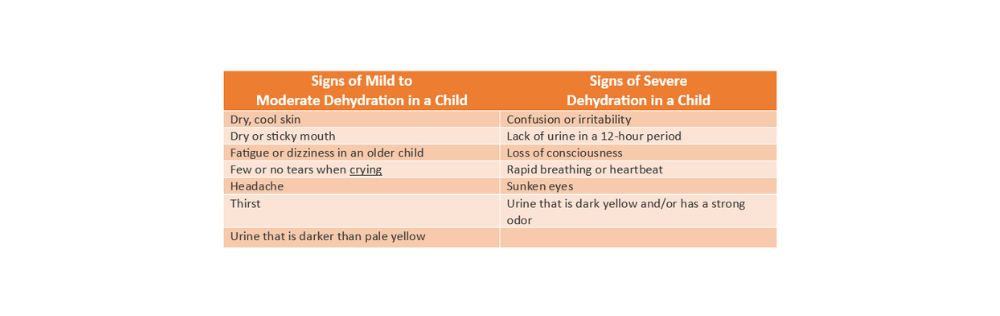
The Cleveland Clinic shares that the physical effects of dehydration include fatigue, dizziness, difficulties with temperature regulation, and general malaise. These symptoms can make it difficult for students to concentrate and participate fully in classroom activities.
Strategies to Promote Student Hydration
Because children spend so much time in school, schools can significantly affect students’ dietary habits and hydration levels. Effective strategies for doing so include:
- Leveraging CDC Healthy Schools resources: The CDC provides a range of resources to promote healthy practices in schools, including hydration. These resources can guide schools in implementing effective hydration strategies.
- Updating school wellness policies: Schools should update their wellness policies to include specific guidelines on hydration. This can involve:
- Ensuring easy access to drinking water throughout the school day;
- Setting up hydration stations; and
- Encouraging students to bring water bottles to school.
Some districts also encourage teachers to drink water outside of the teachers’ lounge to inspire students to drink water instead of sugary drinks.
- Educating students: Teaching students about the importance of hydration is crucial. Schools can integrate lessons on the benefits of drinking water into health and science curricula. Interactive activities and visual aids can further reinforce the message.
- Creating a community of support: Districts can partner with private and public organizations to support hydration initiatives. For example, schools can:
- Apply for grants to fund hydration stations;
- Leverage Environmental Protection Agency (EPA) resources to test drinking water quality; and
- Seek donations of reusable water bottles from local companies.
- Implementing interventions suggested by the American Journal of Public Health: For example, district can install water coolers and distribute reusable water bottles.
A multifaceted approach that combines increased water access with health education can significantly increase water consumption and improve students’ overall health.
Improve Student Outcomes through Hydration
Hydration is a simple yet powerful way to boost academic performance and overall well-being in students. By ensuring that children have access to water and understand the importance of staying hydrated, we can help them achieve their full potential both inside and outside the classroom.
As schools continue to face increased temperatures and deal with aging buildings, it’s important to prioritize proactive steps to promote hydration and create a healthier, more productive learning environment for all students.
Adan, A. (2012, April) Cognitive performance and dehydration. Journal of the American College of Nutrition. https://pubmed.ncbi.nlm.nih.gov/22855911/
Author unknown. (2022, September 28) Water access in schools. Centers for Disease Control and Prevention. https://www.cdc.gov/healthyschools/nutrition/wateraccess.htm
Phillips, A. and Penney, V. (2024, May 24) Schools that never needed AC are now overheating; fixes will cost billions. The Washington Post. As climate change raises school temperatures, some are too hot for learning – Washington Post
Author unknown. (2023, June 5) Dehydration. Cleveland Clinic. https://my.clevelandclinic.org/health/diseases/9013-dehydration
Benton D. and Burgess N. (2009, August) The effect of the consumption of water on the memory and attention of children. Appetite. https://pubmed.ncbi.nlm.nih.gov/19445987/
Benton, D. and Young, H.A. (2013, September) Do small differences in hydration status affect mood and mental performance? Nutrition Reviews. https://academic.oup.com/nutritionreviews/article/73/suppl_2/83/1931019?login=false
Dwyer, M. (2015, June 11) Study finds inadequate hydration among U.S. children. Harvard TH Chan School of Public Health. https://www.hsph.harvard.edu/news/press-releases/study-finds-inadequate-hydration-among-u-s-children/
Edmonds, C.J. and Burford, D. (2009, June) Should children drink more water?: the effects of drinking water on cognition in children. Appetite. https://repository.uel.ac.uk/item/863q8
Edmonds, C.J. and Jeffes, B. (2009, December) Does having a drink help you think? 6-7-Year-old children show improvements in cognitive performance from baseline to test after having a drink of water. Appetite. https://www.sciencedirect.com/science/article/abs/pii/S0195666309006394
Elkay. (2023, June 6) How harnessing hydration can elevate student performance. K-12 Dive. https://www.k12dive.com/spons/how-harnessing-hydration-can-elevate-student-performance/650832/
Helmenstine, A.M. (2020, February 11) How much of your body is water? ThoughtCo. https://www.thoughtco.com/how-much-of-your-body-is-water-609406
Iannelli, V. (2021, March 6) 10 Tips to help kids make healthy drink choices. VeryWellFamily. https://www.verywellfamily.com/soda-and-drink-guidelines-2633934
Gillespie, C. (2022, July 14) How to tell if your child is dehydrated. VeryWellFamily. https://www.verywellfamily.com/symptoms-of-dehydration-2634337
LeRoy, S., Matthews, M. and Wiles, R. (2021, May) Hotter days, higher costs: the cooling crisis in America’s classrooms. The Center for Climate Integrity Resilient Analytics. https://coolingcrisis.org/uploads/media/HotterDaysHigherCosts-CCI-May2021.pdf
Mitchell, H.H., Hamilton, T.S., Steggerda, F.R. and Bean, H.W. (1945, May 1) The chemical composition of the adult human body and its bearing on the biochemistry of growth. Journal of Biological Chemistry. https://www.sciencedirect.com/science/article/pii/S0021925819513394
Morin, A. (2022, September 30) 7 reasons your child may be crying. VeryWellFamily.
https://www.verywellfamily.com/reasons-your-child-may-be-crying-4157950
Mularoni, P. (Date unknown) Summer hydration: what should kids be drinking in the summer? Johns Hopkins University. https://www.hopkinsmedicine.org/health/wellness-and-prevention/summer-hydration-what-should-kids-be-drinking-in-the-summer#:~:text=The%20current%20recommendations%20are%20for,glasses%20of%20water%20per%20day
Prothero, A. (2023, August 16) What educators need to know about schools and hot weather. Education Week. https://www.edweek.org/leadership/what-educators-need-to-know-about-schools-and-hot-weather/2023/08
Schwartz, S. (2022, March 6) How dehydration affects your child’s brain function and mood. VeryWellFamily. https://www.verywellfamily.com/water-to-soothe-childs-anxiety-4098581
Silva, D. (2023, August 19) Hot classrooms are impairing student learning and health amid record-hot year, teachers say. NBC News. https://www.nbcnews.com/news/us-news/hot-classrooms-are-impairing-student-learning-health-record-hot-year-t-rcna100298