Five Ways Superintendents Can Support Autistic Students
Blogs

Autism is a developmental disorder that affects how a person communicates, interacts with others, and perceives the world around them. According to the Centers for Disease Control and Prevention (CDC)’s 2023 report, 1 in 36 children in the United States is diagnosed with autism spectrum disorder (ASD). As a superintendent, it is important to ensure that your school district provides a supportive and inclusive environment for all students. In this blog post, we’ll explore some ways superintendents can support autistic students.
1. Provide Training for Teachers and Staff
Many teachers and staff members may not be familiar with ASD and how to support autistic students. A 2021 comprehensive review of 25 peer-reviewed articles found that mainstream educators “knowledge of ASD is poor.” Providing regular training on autism awareness and evidence-based strategies can improve teachers’ knowledge and skills, leading to better outcomes for autistic students.
A review in the Journal of Autism and Developmental Disorders cites “a recent study, Sam et al. (2020a, b) employed such a program in 59 elementary schools and found significantly positive effects for program quality, teachers use of EBP with fidelity, and autistic children goal attainment.” Another study found that training paraeducators and other staff “present during unstructured social periods” to support autistic students led to improvements in academic and social outcomes for these students.
2. Have Well-Documented Individualized Education Plans
A study funded by the National Institute of Mental Health examined the quality of IEPs for autistic students within 35 classrooms. The study found that IEP quality was “poor” as “the mean number of quality indicators met was 4.7 (SD = 1.6) out of 10 possible.”
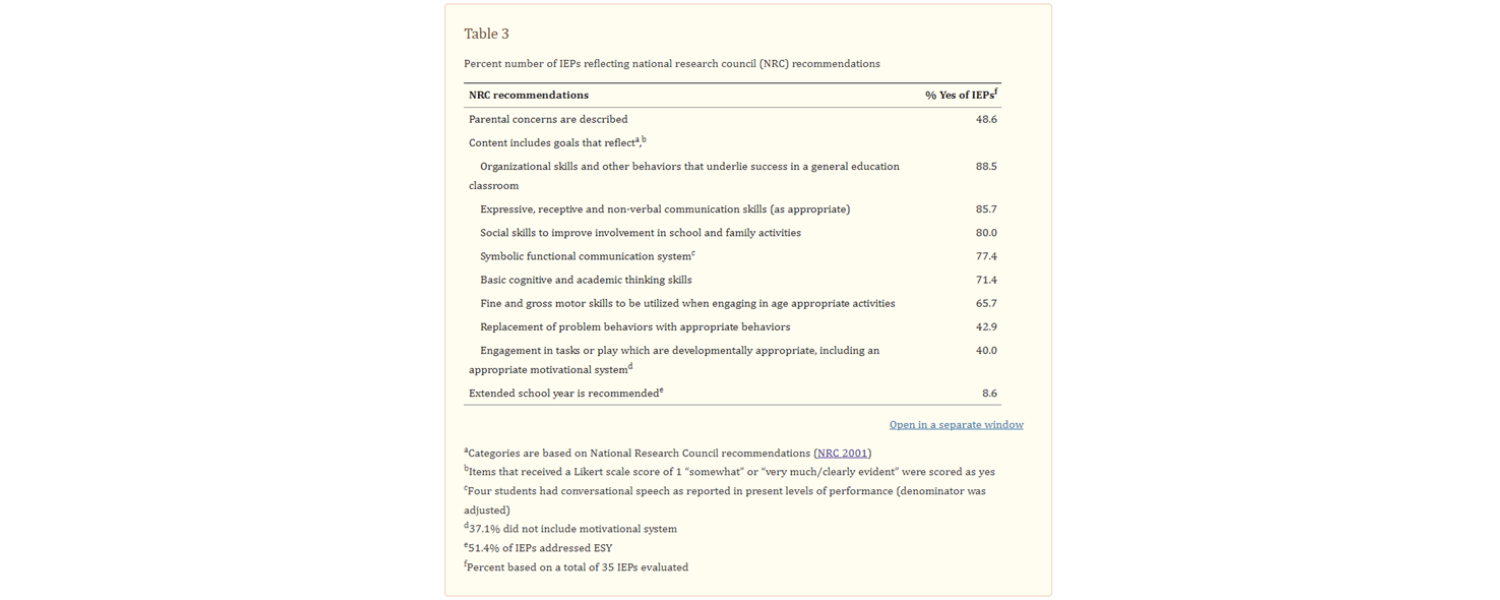
This example is a good reminder to revisit your district’s policies on IEPs. Ensuring that IEPs are well-documented, up-to-date, and comprehensive can help teachers and staff provide the necessary support for autistic students.
3. Intervene Early
Early intervention is essential for autistic students to achieve optimal outcomes. Providing early identification, evaluation, and intervention services can help autistic students develop the skills they need to succeed in school and beyond.
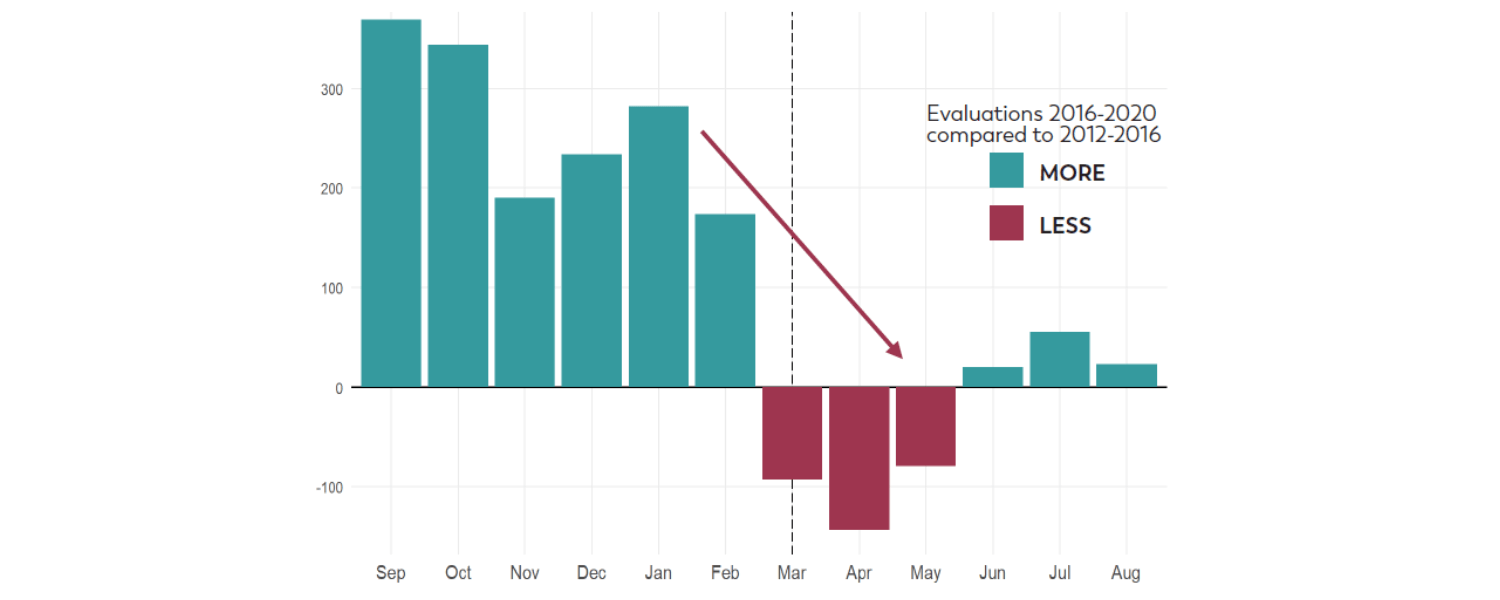
The CDC shares that “early ASD identification was disrupted following the start of the COVID-19 pandemic.” Pre-pandemic, “children born in 2016 were 1.6 times as likely as children born in 2012 to be identified as having ASD by 48 months of age.” Those advances were nullified when the pandemic hit. It’s important to ensure students who were between the ages of 2-4 at the start of the pandemic have all been properly evaluated and identified.
It’s also important to consider at-risk, underserved populations who might not have received the screening options available before their child reaches school age.
The Colorado Department of Education has thorough guidelines to identify ASD in their students. You should consider implementing a clear identification policy if your district doesn’t already have one.
4. Partner with Parents and Community Resources
Collaborating with parents and community resources can help superintendents better understand the needs of autistic students. Establishing partnerships with local autism organizations, parent groups, and mental health professionals can provide valuable resources and support for families and schools.
It’s widely accepted that autistic students thrive on structure and struggle with changes in routine. Ensuring there is consistency among the child’s school and home environments and among those involved in the child’s care is likely to increase positive outcomes.
A 2019 study published in the Journal of Autism and Developmental Disorders also looked to explore the relationship between parents, teachers, and students with ASD. There are links between the student-teacher relationship and student outcomes. This study observed parent behaviors for 117 children and found that more intrusive parents resulted in “poorer-quality STRs.” When appropriate, it’s important for school administrators to help facilitate the parent-teacher relationship to ensure the best outcome for the student.
5. Implement an Anti-Bullying Program
Autistic students face a greater likelihood of being bullied than their peers. In fact, “Children with ASD are bullied by peers at a rate 3-4 times that of non-disabled peers with negative impacts on academic functioning and mental health symptoms, including increased risk for suicidality,” shares a 2019 journal.
One way to help reduce and prevent bullying is by implementing an anti-bulling program.
A 2021 study found that, “antibullying programs are effective in reducing bullying perpetration outcomes by roughly 18–19% and bullying victimization by roughly 15–16%.”
In conclusion, supporting autistic students is an important responsibility for superintendents. By providing training for teachers and staff, creating individualized education plans, intervening early, partnering with community resources, and implementing an anti-bullying program, superintendents can ensure that their school district is providing a supportive and inclusive environment for all students.
Add a Student Safety Reporting System to Your Anti-Bullying Program
Whether it’s bullying, discrimination, suicidal thoughts or dangerous peer behavior, students face a variety of threats. Stay Safe. Speak Up! is an easy, effective way to report any concern, at any time, and improve your school safety.
Learn More