Creating A Culture Of Bleacher Safety: Strategies For School Districts
Blogs

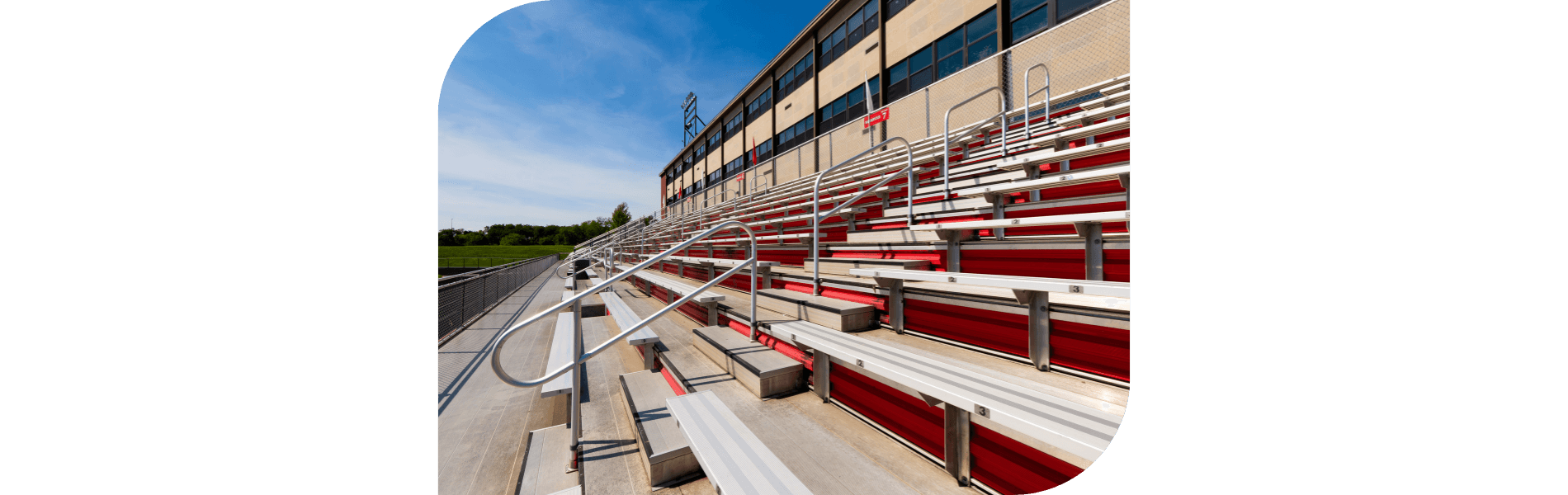
It’s the beginning of the school year, which means it’s time for fall sports-Friday night lights and goals on the pitch! Indoors, volleyball matches will soon be followed by basketball season.
As sports seasons kick off, administrators, coaches and support staff dedicate attention, time and resources to the health and safety of student athletes. Attention, time, and resources must also be dedicated to the safety of the hundreds, and sometimes thousands of students, families and community members who watch these competitions and attend other school functions.
Bleachers are a common feature of sports stadiums and gymnasiums. They often go unnoticed and blend into their setting. However, school administrators and maintenance staff must focus their attention on bleacher safety.
Dangers Associated With Bleachers
In October, 2022, at a high school football game in New Jersey, a three-year old fell through a space in the bleachers 15-feet to the ground below. More recently, a section of bleachers collapsed at a high school in Tennessee. Though the bleachers were empty at the time of collapse, the event is a reminder that bleacher safety cannot be taken for granted.
Two Most Common School Bleacher Safety Hazards
According to the U.S. Consumer Product Safety Commission (CPSC), an average of 10,000 bleacher-related injuries occur each year. Many of these injuries are preventable and can result in significant settlements or jury awards.
Two areas of concern are 1) older bleachers with openings wide enough to fall through and 2) bleachers that are not properly maintained.
- Bleacher Falls: Falls from bleachers are a common cause of bleacher injuries. Some causes of falls are missing, defective or damaged guardrails at the back or open sides of the bleachers. Another fall hazard is openings in the seating and guardrails that are large enough to fall through.
- Poorly Maintained Bleachers: Bleachers are subject to wear, weathering, corrosion, vandalism, and metal fatigue. Folding bleachers are especially susceptible to deterioration. A lack of routine inspections and maintenance contributes to unsafe conditions.
To protect the safety of students and visitors attending school events, it is important for schools to ensure that all school bleachers meet current safety guidelines and are regularly inspected and maintained in good condition.
Best Practices For School Bleacher Safety
Ensuring the safety of students, staff, and spectators on and around school bleachers is paramount. In this section, we’ll explore essential guidelines and actions that school administrators and facility managers can take to maintain secure and hazard-free bleacher environments.
1. Follow Consumer Product Safety Commission Guidelines For Bleachers
Falls through openings in bleachers can cause serious injuries. Therefore, it is crucial to ensure that bleachers are designed and maintained to minimize the risk of falls through openings. The CPSC has developed guidelines that can be used to identify and eliminate features that create a fall hazard in bleachers. Here are some (but not all) of their recommendations:
- Guardrails should be present on the backs and portions of the open ends of bleachers where the footboard, seat board, or aisle are thirty inches or more above the ground or floor below.
- The top surface of the guardrail should be at least forty-two inches above the leading edge of an adjacent footboard, seat board, or aisle.
- Guardrails should prevent the passage of a 4-inch sphere (about the size of a baby’s head). This applies to any openings between components of the guardrail or under the guardrail.
- The 4-inch sphere guideline applies to all open spaces thirty inches or greater above the ground or floor, including spaces above footboards and below seat boards.
- Picket fence (vertical) guardrail designs discourage children from climbing. Patterns that provide a ladder effect should be avoided.
- If in-fill guardrail members allow footholds, limit maximum openings to 1.75 inches.
You can check if your school’s bleachers meet safety standards by following the CPSC guidelines. You can also contact a qualified person or firm to conduct a bleacher inspection.
Automate Your Inspection Reminders
All inspections, including bleachers, can be automated to appointed staff with reminders, required documents, and easy access to records.
2. Complete Regular Bleacher Inspections
Regularly scheduled inspections are needed to identify items needing maintenance and/or replacement so that bleachers remain in a safe condition.
Two Year Inspections
A licensed professional engineer, registered architect, or company that is qualified to provide bleacher products and services, should perform bleacher inspections at least every two years and provide a written “fit for use” certification at that time.
Quarterly Inspections
Bleachers should be inspected at least quarterly and problems that are found should be fixed immediately. Quarterly inspections can be conducted by staff members, but only by staff members with proper training.
Along with quarterly inspections, it is also a good idea to perform a thorough inspection of bleachers after large storms involving heavy rain and strong winds or after an earthquake.
Frequent Inspections
Like all other equipment, bleachers can rust, corrode, and deteriorate over time. They are also subject to acts of vandalism. The National Center for Spectator Sports and Safety (NCS4) recommends inspecting bleachers before every event. The person(s) performing the inspection should know what to look for and how to respond. Students should not be asked to perform inspections.
Following are some tips to help inspect for obvious signs of damage, deterioration, and hazards. The list is not all-inclusive and should not be used as a complete checklist.
- Bleacher should be level and not leaning to one side.
- Frames, joints, and braces should be free of cracks or broken welds.
- Fasteners, nuts, and bolts can loosen or crack over time. Check for play and tighten, as needed.
- Floorboards, planks, and risers should be checked for weak or rough spots and damage. There should be no trip hazards on floorboards or steps.
- Handrails and guardrails, end rails, and rails on stairs should not wobble or have loose connections.
- Seating surfaces should not have any sharp edges, gouges in surfaces, uneven or mismatched connections.
- If bleachers are movable, wheels and moving mechanisms should be in proper working condition.
- All moving parts need adequate lubrication. (Most parts will need lubrication applied several times per year.)
- If bleachers include electrical components, inspect junction boxes, harnesses, switches, wiring and conduit for signs of damage, wear, or corrosion. Moving parts and motorized functions should have the proper guards and covers.
Safety Is A Team Effort
All staff members with any type of responsibility involving bleachers, such as those who set-up before or clean after an event, site/event supervisors, athletic directors, and/or coaches (as appropriate) should be asked to immediately report any signs of rust, rot, splintering, defect or deterioration to administration and maintenance staff.
3. Respond Quickly To School Bleacher Safety Hazards
When defects or dangerous conditions are noted, bleachers must be taken out of service until repairs are made.
Cordon off any defective equipment until it is properly repaired. Under no circumstances should any person other than authorized staff members return bleachers into use.
Keep all inspection and maintenance records. All documents should be signed and dated.
4. Add Bleachers To Your Emergency Response Plans
Emergency Response Plans are written to address hazards that could affect special events. As part of Interscholastic Athletics and After-School Safety and Security Best Practices, The NCS4 recommends incorporating a structural collapse of bleachers into emergency response plans, and to consider the availability and response time of the resources needed to address a structural collapse (such as heavy equipment).
Streamline Your Hazard Reporting
Provide an easy and concise way for all staff to report hazards and potential safety issues to help prevent future accident or injury. These reports can also easily be turned into a maintenance request for repair.
5. Additional Tips For Maintaining Secure School Bleachers
- Only staff members with proper training should set up and operate bleachers.
- Allow adequate time for support staff to properly set up bleachers prior to an event. Accident and injury exposure increase when staff are hurried and work under pressure.
- Bleachers should be operated only by staff members trained to do so.
- Never allow children to climb on the bleacher guardrails. Public announcements can be made prior to events to request parent assistance with preventing children from climbing guardrails.
- Store bleachers while not in use.
- Aisles, handrails, non-skid surfaces, and other items that assist in access and egress should be incorporated and maintained as feasible.
Bleacher safety is not only important for preventing injuries and lawsuits, but also for ensuring a positive and enjoyable experience for spectators. By following these recommendations, you can reduce the dangers of bleachers and create a safer environment for everyone.