Student Sense of Belonging: Why it Matters and How to Improve it
Blogs

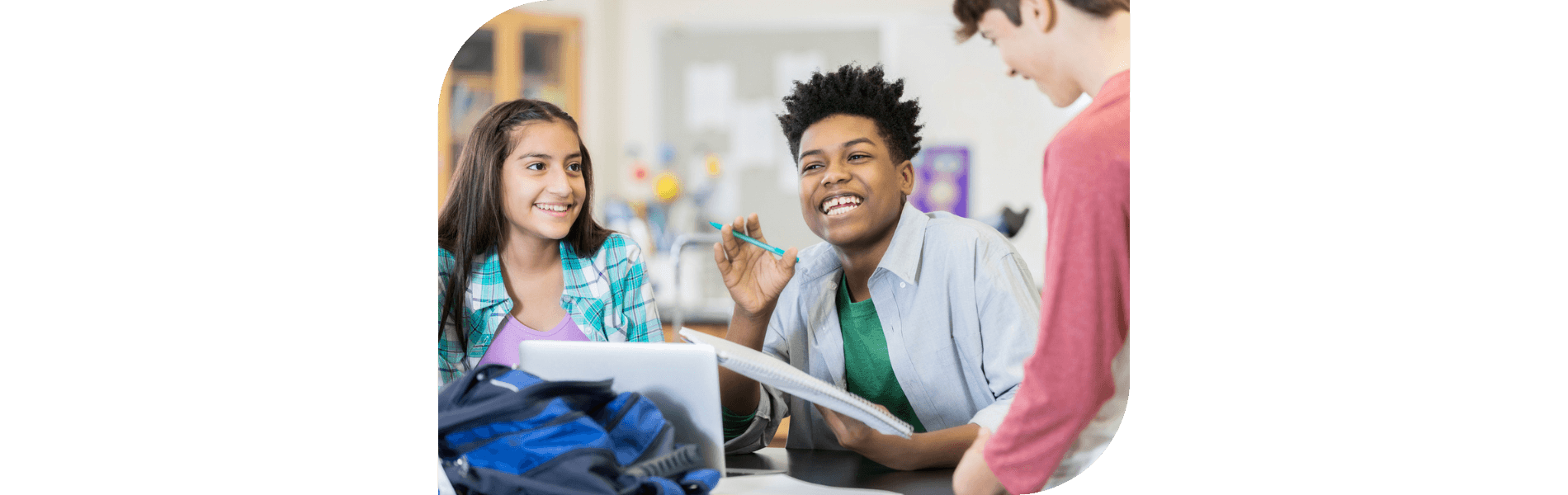
Children grow and develop within their families, schools, and communities, and friendships are a crucial part of this process. These social connections are not only vital for a child’s social-emotional growth and academic success but also for fostering a strong sense of belonging. Through friendships, children learn important social skills and build a network of support that helps them feel valued and included. Without these connections, students may struggle with feelings of isolation and experience a range of social, emotional, and academic difficulties, including challenges at school. Since children spend most of their time in the school environment, it becomes a key setting for developing relationships and a sense of belonging. 1
What is student sense of belonging & why does it matter?
Being accepted by one’s peer group is a fundamental human need. A sense of belonging (also referred to as connectedness) is vital to academic and social-emotional development. A sense of belonging plays a pivotal role in school engagement. School engagement reflects student’s thoughts and behaviors and affects students’ attitudes towards the classroom environment and learning. 2
A student’s sense of belonging is crucial to:
- Academic performance — Students who feel they belong are more likely to engage in class, perform better academically and have higher rates of attendance.3,4
- Mental health and emotional well-being — Belonging reduces feelings of loneliness and isolation, which can lead to depression and anxiety.5 A supportive school environment contributes to students’ overall happiness.6
- Social skills and relationships — Classroom and school climates that foster a sense of belonging encourage social skill development and positive relationships between a student and their peers and teachers.
School belonging is strongly correlated to positive outcomes for students.7 It is particularly important for students from historically marginalized groups.2
What factors affect student sense of belonging?
Several factors can influence how students experience their place within the school community. Understanding these factors can help educators implement strategies that foster inclusivity and support for all students. Here are key factors that affect a student’s sense of belonging:
- Belonging to a socially marginalized group
- Quality of Teacher-Student Relationships
- Classroom Environment
- Peer Relationships
- Family and Community Support
By recognizing and addressing these factors, educators can create a more inclusive and supportive school environment that helps every student feel valued and connected.
Promoting Student Sense of Belonging Across Settings
Creating a sense of belonging involves intentional efforts from educators and school leaders. This can include incorporating diverse cultural backgrounds into the curriculum, promoting inclusive practices, and ensuring every student feels seen and heard.5
School Climate
School climate influences student feelings of inclusion and belonging.7 Improving school climate through a sense of belonging is crucial for fostering a positive and inclusive environment. Here are some strategies for school leaders:
- Foster respect, inclusion and acceptance — Staff should set norms of respect and empathy and model these behaviors consistently.
- Equitable discipline practices — Ensure that discipline practices are fair and equitable. This helps in creating a sense of justice and belonging among students.
- Culturally responsive practices — Train teachers to incorporate culturally responsive teaching methods. This helps students see their identities reflected in the curriculum and feel valued. Encourage activities that celebrate diversity and inclusion. Facilitate cultural events, clubs and partnerships that highlight different identities and backgrounds.
- Enhance communication and relationships — Build strong relationships between staff, students and families. Open lines of communication can help everyone feel more connected.
- Encourage student agency and engagement — Create opportunities for students to express their opinions and be involved in decision-making processes.
- Create safe and inclusive spaces — Ensure that the physical environment of the school is welcoming to all students.8
Culturally Relevant Teaching Practices
Teachers create a foundation for student growth when they establish positive relationships with students and value their diverse cultures and languages. Culturally responsive teaching practices challenge racial and cultural stereotypes, prejudices, racism and oppression.
Culturally informed content and instructional practices follow:
- Create learning environments that value the different cultures and heritages of individual students and their families.
- Express genuine interest in a student and their world. Explore a student’s interests and use them to establish a connection.
- Approach students in a culturally responsive manner. Acknowledge and respect their lived experiences and values.
- Accept students as they are but also focus on their potential. Help students recognize their skills and strengths.
- Connect a student’s cultural assets and references to academic content and skills.
- Employ curricula that encourages students to reflect on their personal lives and society.
- Create opportunities for students to explore their own culture and the culture of others.
Teacher Influence
Teachers affect the social dynamics of a classroom through their interactions with students and classroom management strategies.1 A teacher’s feelings towards a student are often evident in their actions. Teachers tend to have fewer positive interactions and more negative interactions with socially marginalized students. This can send the message to the class that it is OK to treat some students differently than others.
By having positive interactions with a socially marginalized student, a teacher can improve a student’s social standing within their peer group. Effective strategies teachers can use to facilitate positive interactions with individual students include the following:
- Modelling — Teachers set the tone for how classmates treat each other by modeling positive social interactions with students. Teachers should show students the behaviors they would like them to display. Modeling positive behavior is especially effective for students in the social margins of the group.
- Highlighting positive attributes — Another strategy is for teachers to highlight a socially marginalized student’s strengths, talents and positive characteristics in ways that direct positive attention towards them. Highlighting students’ strengths helps students to feel more welcome in the classroom and increases their motivation to succeed.
- One-on-one interactions — Positive one-on-one interactions between a teacher and student help to produce favorable perceptions of socially marginalized students among their peers and positively impact a student’s academic, behavioral and social functioning. It only takes a short amount of one-on-one quality time to take a personal and positive interest in the student and what the student enjoys.
Facilitating Friendships and Social Acceptance
At any age, people learn through doing. Friendships are a normative experience that promote the development of social and relationship skills.
Positive social experiences and friendships can develop through teachers encouraging positive interactions between students in safe and supportive social learning environments. Student acceptance is vital to student development. A key component of social acceptance is to create opportunities for students to learn and practice cooperative and prosocial behaviors through friendships with peers. Teachers can harness the power of the peer group to facilitate positive social experiences between students.
It is essential that teachers pay attention to the social dynamics within their class and promote the social acceptance of all students, especially students who are vulnerable to social exclusion. Creating opportunities for students to interact with peers in cooperative, positive and inclusive ways helps to create these experiences.
Grouping Strategies
Grouping strategies are the ways in which teachers group students for learning and instruction. Grouping strategies influence with whom students interact and associate, thereby affecting the classroom’s social dynamics.
Carefully planned grouping strategies can create opportunities for students’ to expand their social horizons. Through grouping, teachers can create situations that encourage positive interactions between students. Along with the social benefits, grouping strategies can also help to differentiate instruction and meet the individual needs of students.
It is important for teachers to monitor grouping arrangements and periodically rearrange groups and seating arrangements.
Cooperative learning is an instructional arrangement in which students are placed into mixed ability groups to maximize the learning of all group members. Cooperative learning can lead to positive changes in a student’s prosocial behavior and improve how their peers view them. It is particularly beneficial for students with disabilities. To be successful, cooperative learning requires deliberate effort from the teacher to promote social skills and positive interactions between group members.
Parent Involvement
Involving parents is essential to building a supportive and inclusive community that promotes a student’s sense of belonging. Here are some strategies schools can use:
- Communication — Keep parents informed about school events, policies and their child’s progress through newsletters, emails and parent-teacher meetings.
- Parent workshops and training — Offer workshops and training sessions on topics like cultural competency, supporting student learning at home and understanding school policies. This empowers parents to be active participants in their child’s education.
- Foster a sense of ownership and belonging — Create opportunities for parents to volunteer in various school activities, such as classroom assistance, event planning or extracurricular programs.
- Include families in decision-making — Establish committees where parents can provide input on school policies, programs and initiatives.
- Cultural celebrations and events — Organize events that celebrate the diverse cultures and backgrounds of the school community. Encourage parents to share their traditions and stories to promote a sense of pride and belonging.
- Welcome parents at school — Encourage an open-door policy where parents feel welcome to visit the school. Host regular family engagement nights where parents and students can participate together in fun and educational activities.
- Encourage feedback — Provide ways for parents to give feedback on school programs and initiatives. This can be done through surveys, suggestion boxes or regular meetings with school leaders.
- Recognize contributions — Acknowledge and celebrate the contributions of parents through awards, recognition events and public appreciation to reinforce the value of their involvement.
Implementing these strategies can help create a school environment where every student feels they belong, valued and are an important member of the school community. Ultimately, when students feel a strong sense of belonging, they are more engaged, motivated, and successful in their academic and social endeavors. By creating a nurturing and inclusive environment, schools can help every student thrive and build a positive, connected school community.
Foster a Strong Sense of Belonging in Your Schools
Empower your teachers and staff to create inclusive, supportive environments where every student feels valued. Enroll them in key training courses like “Building Safe and Supportive School Environments,” “Implicit Bias and Cultural Responsiveness,” and “DEI for Educators.” Take the first step in boosting student engagement and well-being today!
- Kim S, Lin T-J, Chen J, Logan J, Purtell KM and Justice LM (2020) Influence of Teachers’ Grouping Strategies on Children’s Peer Social Experiences in Early Elementary Classrooms. Front. Psychol. 11:587170. doi: 10.3389/fpsyg.2020.587170
- Jagers, Robert & Rivas‐Drake, Deborah & Williams, Brittney. (2019). Transformative Social and Emotional Learning (SEL): Toward SEL in Service of Educational Equity and Excellence. Educational Psychologist. 54. 1-23. 10.1080/00461520.2019.1623032.
- Ralph, M. (2022). How to Cultivate a Sense of Belonging in Schools. Edutopia.org
- Online Blog. (2020). Research shows ‘a sense of belonging’ is important for pupils’ learning and behaviour. www.ucl.ac.uk.
- Online Blog: Belonging in Schools: Why It Matters and How to Build It. newleaders.org.
- Strayhorn, T. L. (2019). College students’ sense of belonging: A key to educational success for all students (2nd ed.). New York: Routledge.
- Mulvey KL, Gönültaş S, Irdam G, Carlson RG, DiStefano C and Irvin MJ (2021) School and Teacher Factors That Promote Adolescents’ Bystander Responses to Social Exclusion. Front. Psychol. 11:581089. doi: 10.3389/fpsyg.2020.581089
- Cohn-Vargas, B. (2021). How School Leaders Can Boost Students’ Sense of Belonging. Edutopia.
- Starkey, J. (2023). Effective strategies for building and sustaining a positive school culture and climate. Academy of Educational Leadership Journal, 27(S2), 1-3.
- Garrote A, Felder F, Krähenmann H, Schnepel S, Sermier Dessemontet R and Moser Opitz E (2020) Social Acceptance in Inclusive Classrooms: The Role of Teacher Attitudes Toward Inclusion and Classroom Management. Front. Educ. 5:582873. doi: 10.3389/feduc.2020.582873
- Hendrickx MMHG, Mainhard T, Cillessen AHN and Brekelmans M (2020) Teacher Behavior With Upper Elementary School Students in the Social Margins of Their Classroom Peer Group. Front. Educ. 5:568849. doi: 10.3389/feduc.2020.568849