Marching Band Summer Safety
Newsletter Article


Are you marching 8 to 5 or 12 to 5? Are you in the battery or the brass? Are you marching to the form and to the dot? These are the questions swirling around schools everywhere as band camp begins. With breaking temperatures every summer, other concerns for marching band participants must also be addressed. Perhaps the first question you should answer is how to keep your students safe and healthy as they march outside for practice, camp, games and competitions?
Marching Band Safety Training
Keeping students safe and healthy during summer band camp is critical for a successful season. As schools wrestle with this challenge, they soon realize that the first step in preparation is to train all adult staff and volunteers to recognize heat stroke and heat exhaustion. They must know the warning signs and how to react to protect the students and other staff.
Heat-related illnesses can occur within 10-15 minutes or over a few days, and this variation in the onset of symptoms can make it difficult to detect. A team of people is critical in keeping students safe. There is a strong chance that if only one or two people know the signs of heat-related illness, they will miss seeing someone with a problem, so safety training is essential for everyone. The recommended marching band safety training for all adults should include heat safety, first aid, seizures, CPR, and diabetic care.
It is also important to have a written plan for emergencies that is posted in multiple places for easy access. The plan should include emergency phone numbers, your location’s address, and what to do in an emergency. Rehearse and talk about the plan regularly; every person there should know where the plan is located in case of an emergency.
Marching Band Heat Protocols
How hot is “too hot” for marching band practice?
The marching band heat protocols accepted by many state lawmakers and schools are measured using the Wet Bulb Globe Thermometer (WBGT). The WBGT considers the wind, sun, cloud cover and humidity. It is designed to take in all of this weather information and mimic the cooling capabilities of human skin to derive the working temperature for a human. The American College of Sports Medicine (ACSM) has created guides to help you determine what WBGT temperature is safe and what temperature is too hot and will require a change in plans.

You can plan ahead for heat threats with the WGBT forecasts on the National Weather Service’s National Digital Forecast Database page.
Keeping Students Safe While Marching
- Start slow and acclimate to the heat and activities. Students are more prone to heat-related illness in the first week of practice. Students with other health problems, such as asthma or diabetes, may need extra time to acclimate. The Korey Stringer Institute has a pre-season heat acclimatization guide for football players. A similar guideline is recommended for the marching band as well.
- Monitor the temperature with a wet bulb globe thermometer (WBGT) and follow all state and local laws and school recommendations. The WBGT is designed to measure expected heat stress on humans. Take measurements every 30 minutes before and during any outdoor activity.
- Hydrate continuously. Do not wait for students to be thirsty. Instead, enforce a culture of frequent water breaks to stay hydrated.
- Remind all staff to monitor continuously for signs of heat illness. Heat-related illnesses can happen quickly, and constant monitoring can save lives.
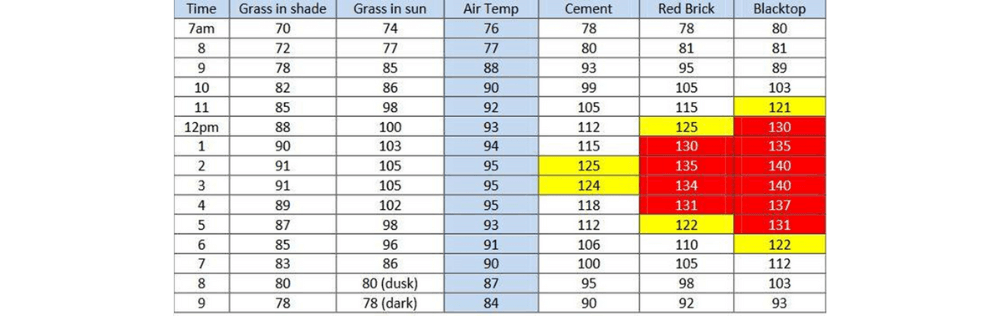
- Seek shade and grass whenever possible. The temperature can vary greatly depending on the surface and the amount of direct sun. Standing in direct sunlight, instead of shade, can feel 15-20 degrees warmer than the air temperature. According to the University of Georgia, surface temperature increases on cement or blacktop. This rise in field surface temperature can also increase students’ heat stress.
Putting It All Together
Summer Bandcamp should provide the team-building experience of a lifetime for students. This can only happen if you keep your students healthy and safe. Make a plan to provide marching band safety training for all adults involved in the program. Follow the American College of Sports Medicine recommendations to ensure weather conditions are safe for marching before and during all events. Promote a culture of well-being by following safe marching band heat protocols. And enjoy your marching season.
Online Marching Band Staff Training
Ensure your marching band is ready for a safe and successful season. Learn more about comprehensive safety training for all staff and volunteers today!