Winter School Safety: Prevent Slips, Trips, and Falls
Newsletter Article


Slips, trips, and falls are common causes of workplace injuries and pose year-round challenges for schools. The winter months bring additional hazards for both students and school staff, making it imperative to maintain a safe learning environment. School leaders should prioritize severe weather preparedness, recognizing that each situation is unique, and there is no one-size-fits-all solution. They must remain attuned to these risks and establish winter weather procedures and practices well before the cold sets in.
School slip and fall accidents can be prevented. This blog will discuss slips, trips, and falls prevention in schools. It will share strategies to educate administrators and school leaders on how to keep students and staff safe during inclement weather.
Eight Strategies to Prevent School Slip and Fall Accidents
Preparing for Inclement Weather: Explore these eight strategies to prepare for, respond to, and mitigate the risk of school slip and fall accidents during inclement weather.
1. Prevention Training
Provide winter weather prevention training for school staff, covering closure protocols and procedures to prevent school slip and fall accidents. Encourage a culture of safety reporting, which will be discussed more in the next section of this blog. Designate a staff member to monitor weather conditions and provide timely warnings to employees, students, and the broader community in the event of an impending severe storm. Additionally, review and test protocols for notifying local media regarding closures and delays.
2. Inspections
Most slip and fall accidents happen outdoors. To reduce this risk, it’s crucial to inspect outdoor areas, such as parking lots and sidewalks, for cracks, potholes, and damage, and repair these issues before the cold weather sets in. These damaged areas can become hidden by snow or can collect water, which can freeze and lead to school slip and fall accidents. Additionally, other essential measures include replacing or repairing lighting as needed, clearly marking the front edges of stairs, steps, uneven walk surfaces, and ramps, placing caution signs at slip, trip, and fall hazard points, and, when required, setting up barriers to block access or suggesting alternate routes.
3. Proactive and Reactive Strategies
Anti-icing serves as a proactive strategy for winter storm preparedness. It involves applying a strategic, small amount of anti-icing fluid to the pavement before a storm, effectively preventing the bonding of snow and ice and providing valuable time for cleanup efforts.
Deicing is a reactive measure applied to snow, ice, or frost that has already bonded to the pavement. All ice melts are different, but the most common and efficient solution is salt. It’s important to have the appropriate type of salt on hand and to thoroughly read the instructions beforehand to avoid applying too much.
It’s vital to remain mindful of the environmental impact, as excess salt runoff can harm water sources.
4. Plan for Snow and Ice Removal
Establish a comprehensive plan for snow and ice removal. It’s crucial to have discussions in advance with in-house staff or a snow removal contractor regarding the specifics of this plan. Clearly outline the timing and frequency of snow removal, with a recommended threshold of after a 1-inch accumulation, and designate a piling area away from walking routes. Parking lots and sidewalks should be cleared before staff members arrive with continuous monitoring throughout the day.
5. Be Mindful of Mats
Place scraper mats on the outside of the building and water-absorbent mats at every entrance. Provide clear instructions to maintenance staff to regularly inspect all mats, ensuring they have no curled or torn edges, worn-out face materials, or cracks. Mats should be in good condition, cleaned and rotated frequently, securely anchored, and positioned properly to eliminate gaps or tripping hazards.
6. Think About Proper Footwear
Promote the daily use of slip-resistant footwear among employees, especially during the winter months. Avoid spiked heels, leather soles, or shoes lacking traction. Shoes with rubber soles, flat heels, and multi-channel tread do a much better job of preventing school slip and fall accidents.
7. Safe Travel to and From School
Ensure that the bus steps are free of snow and ice. Consider the use of step tread heaters or keep a spray bottle of brine on hand for spot treatments.
Remind students not to rush when attempting to catch the bus, especially when roads and walkways are slippery. Rushing can result in hazardous situations.
During cold weather, pedestrians are more likely to be in a hurry and may be hidden by poor visibility or snowbanks. Remain alert for children who may be hidden or standing in or near the street at the bus stop due to mounds of plowed snow.
8. Review and Continuous Improvement
Ensuring the safety of staff and students during winter months is an ongoing process. Schools should regularly assess existing protocols, taking into account feedback from staff, students, and incident reports. This proactive approach allows for the identification of potential weaknesses or areas for improvement.
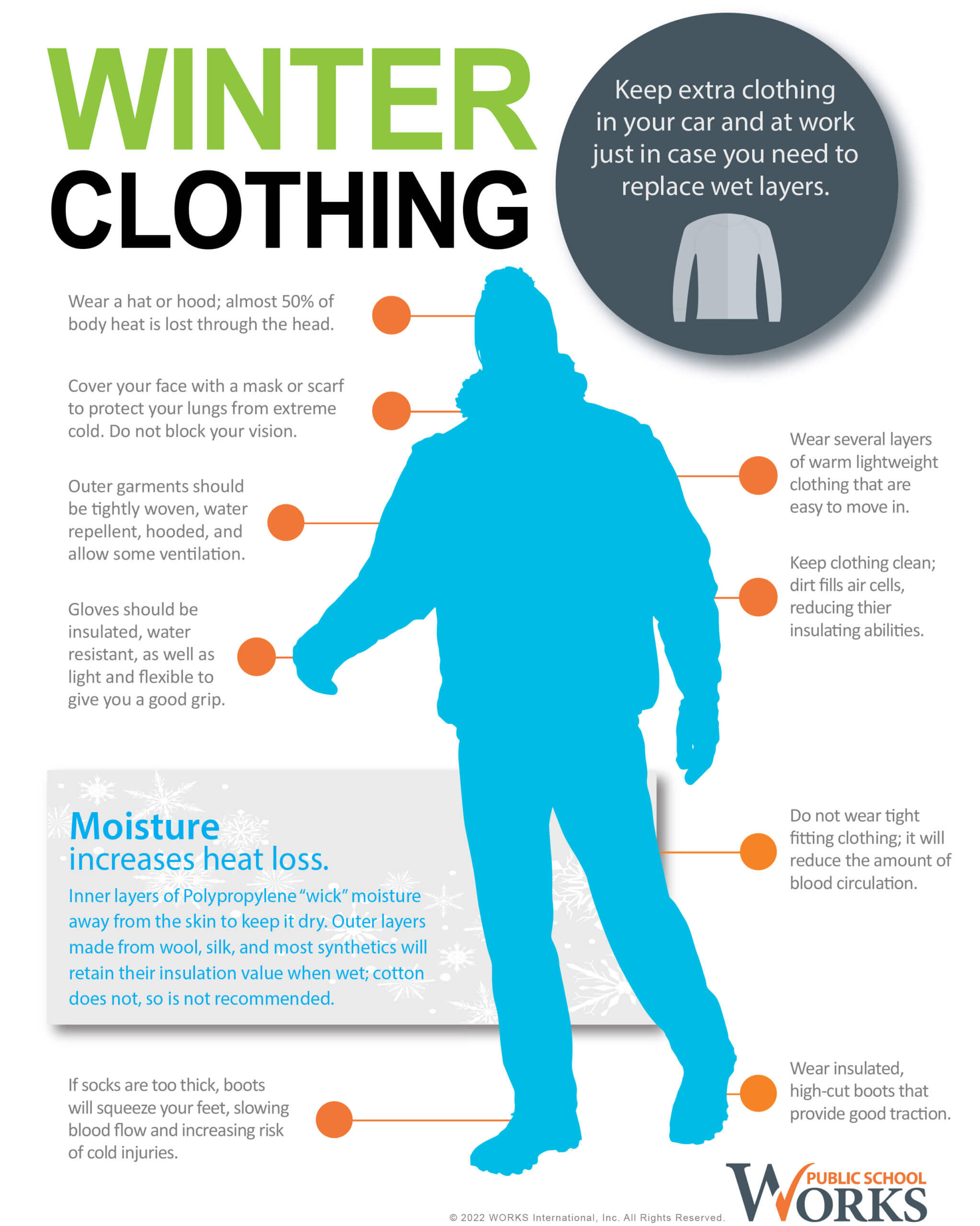 Stay Safe This Winter
Gear up for winter safety! Download our free poster on winter clothing. Keep your school safe and prepared.
Following Inclement Weather: Hazard and Accident Reporting Systems
Two crucial components stand out after inclement weather: Hazard Reporting and Accident Reporting Systems. Let’s explore how these automated solutions not only enhance proactive safety measures but also streamline the reporting, tracking, and management of hazards and accidents, ensuring a swift and effective response to safety concerns.
1. Hazard Reporting System
School staff should be on constant alert for slip, trip, and fall hazards. An example of a hazard is the accumulation of water indoors from the tracking in of water and snow. It’s essential to clean these areas up quickly. When it is not safe or possible to correct a hazard, a school staff member should use a reporting system or, in emergency situations, directly notify the appropriate personnel.
Hazard reporting systems automate the management, notification, tracking, and documentation of hazards and other safety concerns. These systems immediately notify and mobilize key staff members to address each safety concern.
Some key benefits of a hazard reporting system include improving safety by addressing safety concerns before injuries occur, improving prevention programs as key staff members immediately respond to and address safety concerns, and reducing the time required for reporting, tracking, resolving, and documentation of safety concerns.
2. Accident Reporting System
Some accidents are unavoidable and it’s important to note that slips, trips, and falls occur frequently, especially during the winter months. To effectively promote slips, trips, and falls prevention in schools, it’s important to have an accident reporting system in place. These reporting systems eliminate time spent managing accidents with an automated solution, saving valuable time, and ensuring that appropriate steps are taken for each staff or student accident.
Once reports are submitted, the system should immediately mobilize key administrators, supervisors, and accident investigators to address their specific responsibilities. These systems automate the reporting, tracking, and management of accidents, including documenting if first aid was administered, investigations, witness statements, and communicating with all key personnel.
In conclusion, the importance of addressing winter school safety, particularly related to slips, trips, and falls prevention in schools, cannot be overstated. These accidents can lead to injuries and disruptions in the school learning environment. School leaders should proactively prepare for severe weather and continuously refine safety protocols to significantly reduce the risk of winter-related accidents.