The Power of Effective Praise: A Guide for Teachers to Motivate Students
Blogs


As the school year begins, and teachers consider their classroom management strategies, incorporating daily positive praise practices is essential to developing rapport. As parents, educators, and caregivers, we are here to support students through positive praise, meaningful engagement, and social-emotional strategies. In this blog post, we will explore effective praise; its catalyst for motivation, engagement, and building self-confidence; and employing social-emotional supports.
From understanding the psychological impact of praise to practical strategies for implementation, this guide is designed to help educators harness the power of positive reinforcement in the classroom. Praise teaching should not be seen as a naïve form of encouragement, but rather an effective strategy for imparting social and emotional life skills. It is the subtle art of fostering intellectual growth through positive reinforcement. So, whether you are a seasoned educator or a novice teacher, read on to unlock the potential of praise teaching.
The Art of Positive Praise
Positive praise extends beyond complimenting students; it is about acknowledging effort, growth, and individual character. Focusing on the process rather than the outcome and reframing praise with specific language can encourage curiosity and a willingness to learn.
Consider these when offering feedback:
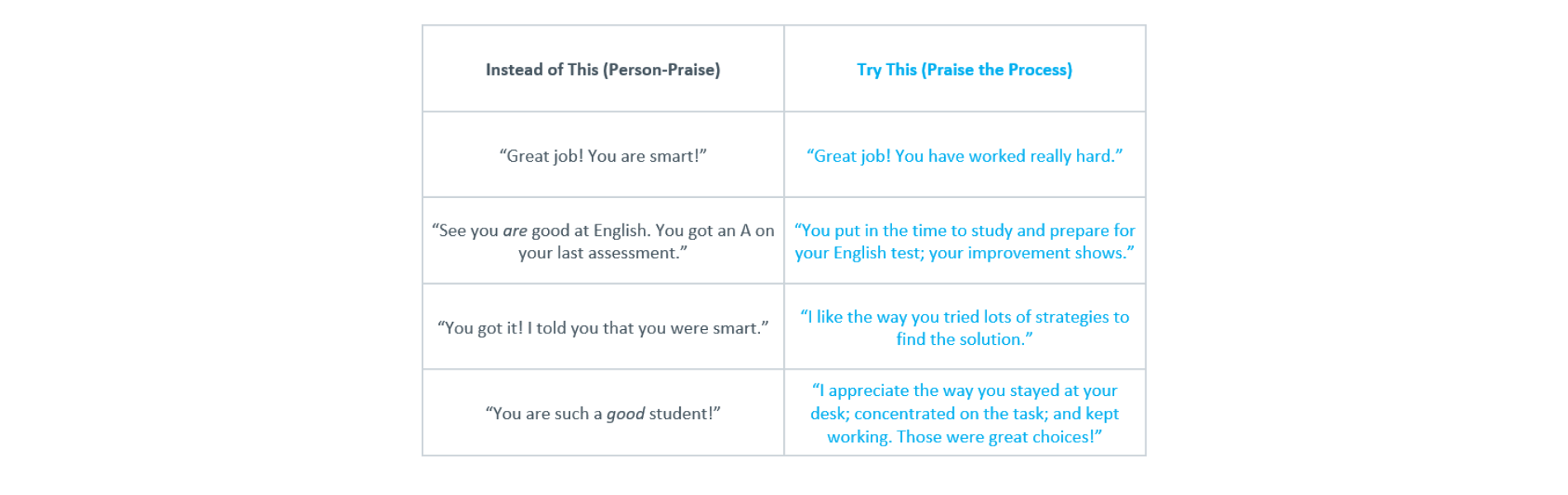
Help students develop by engaging their inquisitive nature and sense of exploration by praising curiosity instead of offering vague praise.
Take Praise a Step Further with Automated Positive Reports
The Benefits of Effective Praise for Students
More research shows the profound effects of meaningful praise on students’ mindset, motivation, and personal and academic development. Below are three research-based benefits of effective praise for students.
1. Meaningful Engagement Sparks Creativity
When adults provide meaningful praise to students, anxiety about potential failure is reduced, according to Carol S. Dweck, author and research psychologist at Stanford University. Praise that encourages students’ interest strengthens the rapport between children, peers, and teachers. Consider engaging with students in collaborative projects or activities that highlight or value their ideas.
Actively listen to students when they share ideas and validate their feelings; these strategies boost self-esteem.
2. Build Strong Social-Emotional Foundations
Emotional intelligence is essential to personal growth and student development. Helping students identify, express, and manage emotions through positive praise equips them with essential life skills to develop in and outside the classroom.
According to the American Psychological Association,
“how we talk to our students about their performances and work … affects their mindset.”
Work to nurture students with emotional check-ins can create a safe space to share openly. This builds a student’s foundation to help them navigate challenging situations, analyze problems, and brainstorm solutions.
Educators, consider asking yourself: “How can we ask our students to have a growth mindset … if we don’t authentically do it ourselves? We lead by example, modeling both successful and challenging moments.”
3. Constructive Feedback Fosters Growth
Balancing praise with constructive feedback encourages students to face obstacles and reframe failures as an opportunity for growth.
Frame student feedback as an opportunity to refine and build on their skill set. Reassure students that mistakes are part of the learning process.
According to veteran teacher Wendy Turner, educators should be authentic with students about success and failure. Modeling these behaviors within the classroom eventually becomes seamless with practice.
Offer Online SEL and PBIS Training to Educators
An Example of Implementing Positive Praise in the Classroom
“Having a growth mindset means that you believe your intelligence is malleable.” This mindset encourages teachers to support students who will embrace setbacks as stepping stones to success, as well as foster resilience and perseverance in challenging tasks.
Implementing positive praise into classroom activities can be as simple as restructuring a writer’s workshop, which gives students an opportunity to develop as a writer. Remind students that they are writers and help them navigate the process.
Here are practical tips to implement with your next writing assignment:
- Set goals for student growth during the writing process. As a class or with an individual student, chunk or break up elements of the assignment into smaller tasks.
- Encourage students to reflect on the task by rewriting directions in student language.
- Praise the process which will emphasize and empower students to employ modeled strategies.
Teachers who employ these techniques find their students replicating language and actions that lead to greater growth. By celebrating the journey rather than just the destination, educators see positive praise aligns with their goals to create a cycle of continuous learning and achievement.
Positive praise, meaningful engagement, and robust social-emotional support are the cornerstones to raising empathetic, confident, and resilient children. Educators who celebrate effort, engage students’ curiosity, and provide emotional guidance empower young minds to tackle opportunities and challenges they may encounter.
How PublicSchoolWORKS Can Help with Praise in the Classroom
PublicSchoolWORKS helps educators create healthy learning environments through the implementation of effective praise, social-emotional learning, and other risk management techniques. Our innovative tools and expert services, such as the StudentWatch and EmployeeSafe programs, support the mission to foster a healthy culture of positive recognition in schools.
To further support your school, PublicSchoolWORKS incorporates social-emotional learning into the general catalog of courses. Social-emotional learning is a critical element of Positive Behavior Intervention and Support (PBIS), which is also an optimal addition to professional development and learning more ways in which to support student development. Courses can also be customized to your state or district’s individual needs.
So, why not take the next step in enhancing your teaching practice? Turn theory into action today by exploring the solutions offered by PublicSchoolWORKS. Together, let’s create a dynamic learning space that rewards and supports students in their journey of growth.