Your Complete Guide to Civil Rights Data Collection Reporting 2023
Blogs

As a school administrator, you know the importance of keeping track of data, especially when it comes to ensuring compliance with civil rights laws. One critical aspect of this is the Civil Rights Data Collection Reporting (CRDC) program, which provides valuable insights into the state of civil rights in schools across the country.
In this blog post, we’ll provide a comprehensive guide to CRDC reporting in 2023, including what it is, who needs to report, and how to submit your data. By the end, you’ll have all the information you need to ensure your school district is meeting its legal requirements and promoting equity for all students.
What is Civil Rights Data Collection Reporting?
Civil Rights Data Collection Reporting is a biennial survey conducted by the U.S. Department of Education’s Office for Civil Rights (OCR). The CRDC reporting survey collects data on key education and civil rights issues, such as access to advanced courses, discipline, bullying, and harassment.
“The Civil Rights Data Collection (CRDC) is a longstanding aspect of the overall enforcement and monitoring strategy used by the U.S. Department of Education’s (ED) Office for Civil Rights (OCR) to ensure that recipients of ED’s federal financial assistance do not discriminate on the bases of race, color, national origin, sex, and disability,” shares the Office of Information and Regulatory Affairs.
Why is CRDC important?
CRDC data helps identify disparities in educational opportunities and resources among various student populations, such as students of different races, ethnicities, genders, and disabilities. The data is used to inform policy decisions and allocate resources to ensure that all students have equal access to quality education.
For example, the 2013-2014 survey showed that “in 23 states, wealthier school districts receive[d] more funding than poorer districts.”
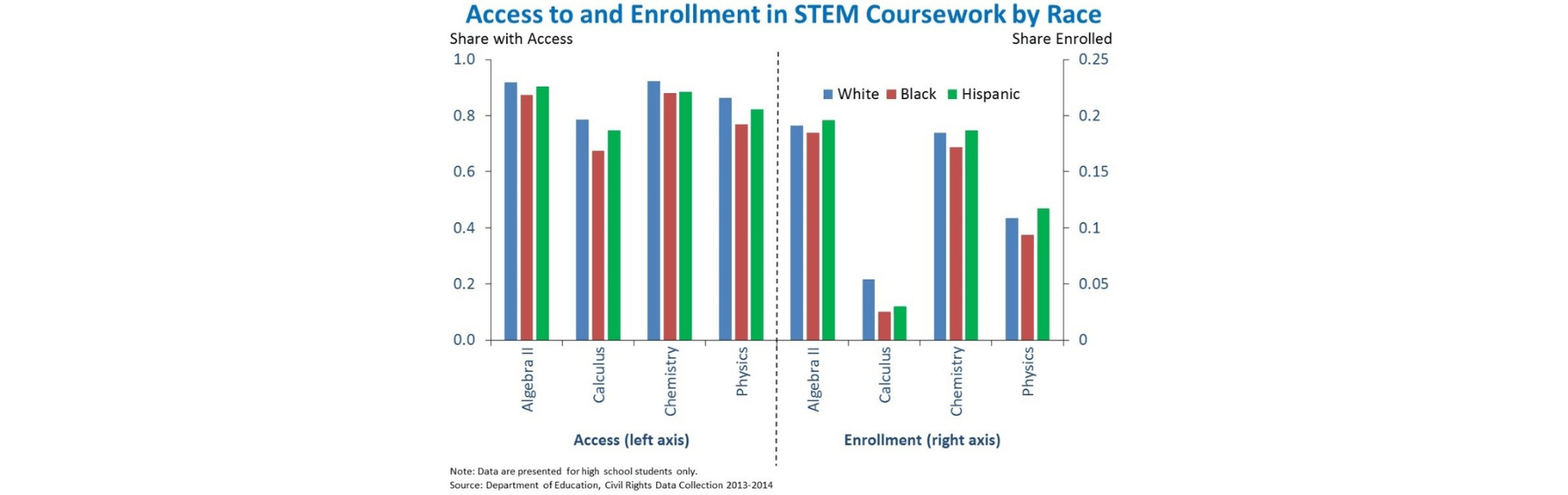
It also showed that “compared to white students, black students [were] 14 percent less likely to have access to calculus and 11 percent less likely to have access to physics.”
Who is required to report CRDC data?
All public schools, including charter schools, juvenile justice facilities, and alternative schools, are required to report CRDC data. Additionally, all school districts that receive federal funding are required to report CRDC data.
What data is collected in CRDC?
CRDC collects data on various topics related to civil rights and education, such as student enrollment and demographics, discipline and bullying, teacher qualifications and assignments, and school finance.
2021-2022 topics include:
- COVID-related Items
- School & District Characteristics
- Discipline
- Referrals to Law Enforcement and School-related Arrests
- Offenses
- Harassment or Bullying
- Restraint and Seclusion
- Interscholastic Athletics
- Early Childhood Education
- Pathways to College and Career
- Teachers and other Personnel
Click here to view List of CRDC Data Elements for School Year 2021–22. Schools are required to report data on all these topics, regardless of the size of the school or district.
When is CRDC data collected and reported?
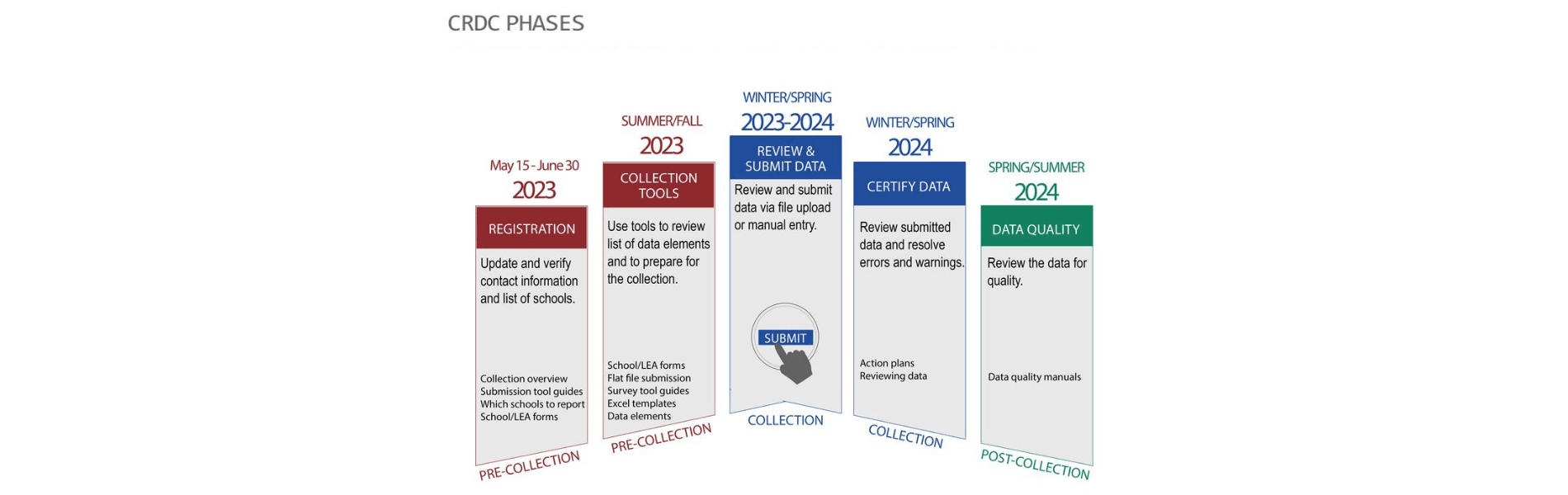
Schools typically report CRDC data in the fall of each year, and the data is released to the public in the following spring. This year, 2021-2022 data reporting registration opens on May 15, 2023, and closes on June 30, 2023.
The CRDC Resource Center shares that, “the CRDC registration is a required step and must be conducted even if you already provided contacts previously.”
Data submission will open Winter 2023. A specific submission period has not yet been established. Please visit the Civil Rights Data Collection Resource Center for the most up-to-date time frame.
How do schools submit CRDC reporting?
You can submit your data online once the submission window opens. Usernames and passwords will be disseminated after you complete registration. Below is a video on how to submit.
How can schools prepare for CRDC reporting?
To prepare for CRDC reporting, schools should ensure that they have accurate and up-to-date data on student demographics, enrollment, discipline, and other relevant topics. Schools should also review the CRDC survey in advance to understand what data is required and how to report it.
What are the consequences of non-compliance with CRDC reporting?
Schools that fail to comply with CRDC reporting may be subject to enforcement action by the OCR, including loss of federal funding. Additionally, non-compliance can result in missed opportunities to identify and address disparities in educational opportunities and resources among various student populations.
How can schools use CRDC data to improve educational equity?
CRDC data can be used to identify disparities in educational opportunities and resources among various student populations. Schools can use this data to develop and implement policies and programs that address these disparities and promote educational equity for all students.
CRDC reporting is a critical tool for promoting educational equity and ensuring that all students have equal access to quality education. By understanding the importance of CRDC data, and how to prepare for and comply with CRDC reporting requirements, schools can help promote positive change in their communities and support the success of all students.
Are you ready to make your school safer?
You focus on education—we’ll handle accident and compliance management. Get a hands-on experience with our programs by requesting a demo.
Request a Demo